

Top Inventory Management Software for Used Car Lots

May 1, 2026
16 min read
Used car inventory management software works when it tracks vehicles through acquisition, pricing, listing, aging, and sale. It provides visibility into stock levels, days-on-lot, cost basis, and pricing position. These tools help dealers avoid aging inventory, improve turn rates, and make data-backed pricing decisions.
Inventory Management doesn’t just mean Tracking Cars.
Vehicle inventory management software should not stop at tracking units. It needs to show:
- What did I buy this for?
- What have I added to it?
- How long has it been sitting?
- Where do I stand against the market?
- What will I actually make if it sells today?
Many tools only solve one part of this. Some help you list cars faster. Some help with pricing. Some show basic stock levels.
But very few connect the full lifecycle of a vehicle. And that is why it’s important to talk about how to choose the right automotive inventory management software for used car dealerships.
Top Inventory Management Software for Used Car Dealerships
For used car dealerships, choosing inventory management software matters because every vehicle has a different cost, timeline, and margin – and missing even one stage can change the outcome of the deal. This guide breaks down auto inventory management software options you may want to explore. Each tool is listed for comparison and ease of reading, not ranked in order.
1. dealr.cloud
Best For: Independent dealers needing auto dealership inventory management software that works as a full-cycle, all-in-one system where inventory, service, and accounting stay in sync from buy-to-sell.

dealr.cloud treats inventory as more than just a list of cars. It follows a vehicle from acquisition through recon, service work, listing, and final sale within the same system. This matters because dealers need to know what is ready, what is delayed, and what is costing more than expected, as those costs directly affect pricing and profit. When recon, service, and accounting live in separate tools, the numbers don’t line up and decisions get delayed.
Here, labor, parts, and repair activity update the vehicle record as they happen. Dealers can see what a car actually costs, where it stands, and how that impacts margin before closing the deal. It also becomes easier to spot which cars are stuck in recon, waiting for photos, or ready for the lot.
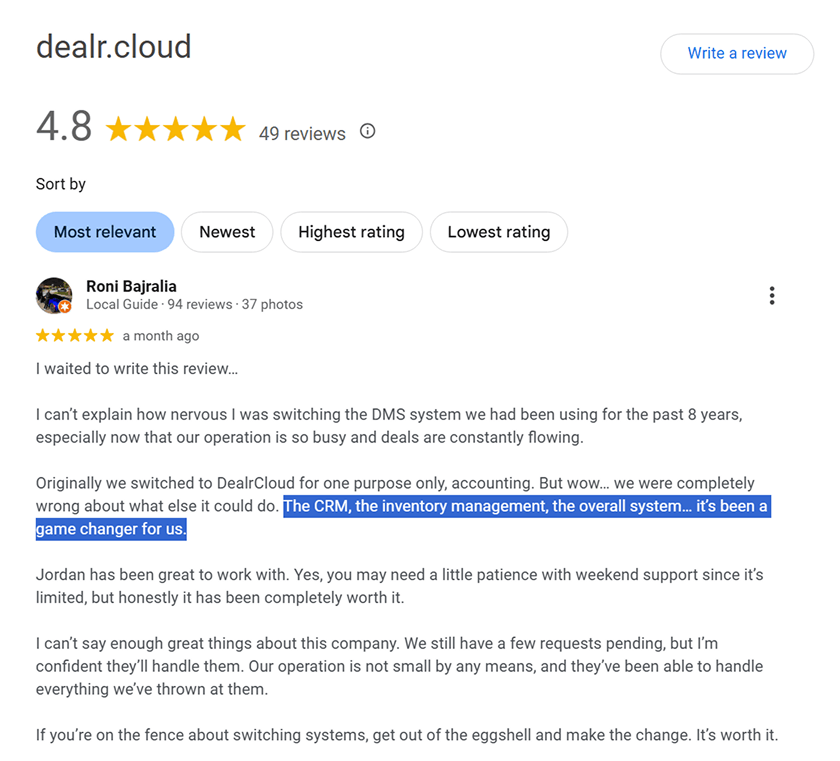
Check out this verified Google review from a recent dealr.cloud customer:
2. vAuto Provision
Best For: High-volume used car dealers wanting market-based pricing and aging visibility tied to live comps.
vAuto Provision is built around pricing discipline. Dealers use this auto dealer inventory management software to see where each vehicle sits against local market supply, price bands, and days-to-sell trends.
The downside is cost and rigidity. Independent dealers may find the pricing closer to franchise-level tooling. Workflows assume a vAuto-centric stack, which limits flexibility if you already run other systems. Training time is real, and smaller teams often use only part of what they pay for. Some dealers want franchise-level structured systems without the enterprise complexity.
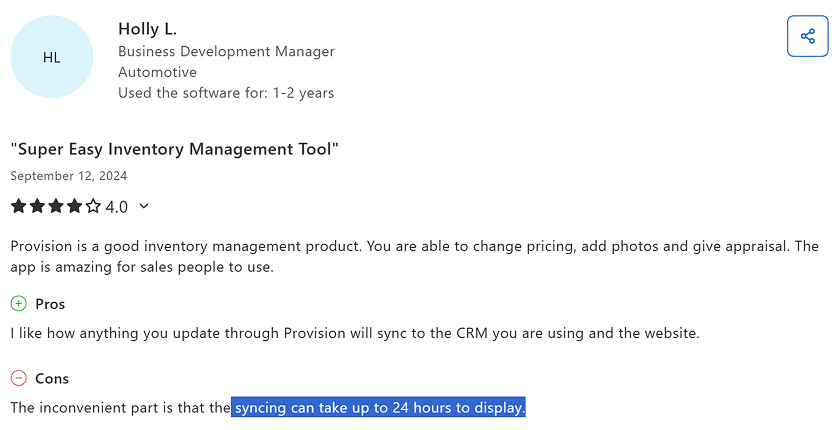
The inconvenient part is that the syncing can take up to 24 hours to display. On a busy weekend, when multiple customers are looking at the same vehicle, that delay can lead to missed opportunities or pricing decisions based on outdated data.
3. DealerSocket Inventory+
Best For: Mid-size dealer groups needing centralized inventory control with pricing and merchandising tools.
Inventory+ focuses on keeping vehicle data clean across locations. Dealers like bulk edits, VIN decoding, photo tracking, and pricing rules that apply across rooftops. Reviews point to improved consistency in listings and fewer manual updates once vehicles are live.
Where it struggles is speed and depth. Users note lag during peak hours and limited insight into recon or true cost basis. Inventory lives alongside CRM and desking, but inventory decisions still feel siloed. Smaller independents say it can feel heavy if inventory is the main need.
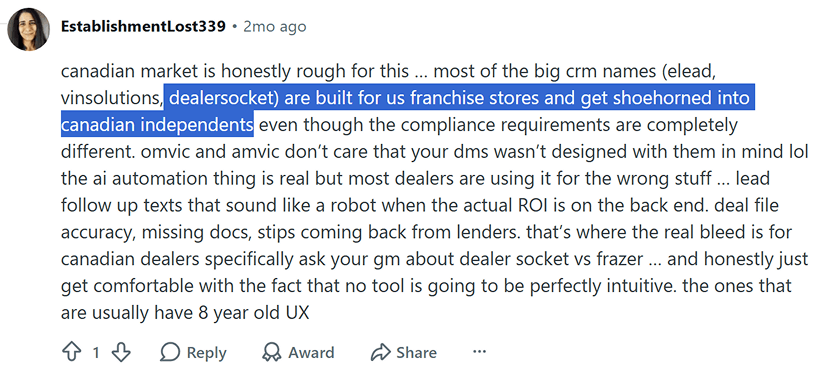
It earns its place as a used car inventory management software for dealers managing scale, not for those prioritizing tight buy-to-sell cost control. However, before choosing, check whether the system is built for franchise workflows or independent operations, as the fit can vary significantly.
4. Auto/Mate
Best For: Dealers wanting inventory tied closely to service and fixed operations.
Note: Auto/Mate is part of the DealerSocket ecosystem, which sits under Solera, though the products operate as separate systems rather than a single unified platform.
Auto/Mate manages used inventory alongside service workflows. Dealers value visibility into recon costs flowing back to vehicle records and coordination between service and sales teams. Reviews highlight strength in fixed ops alignment.
Inventory supports service operations. An operationally sound dealership inventory management software should also provide clear pricing, aging, and decision visibility. Here, pricing tools and aging views are basic. The interface shows its age, and independent dealers often find it aligned more with franchise workflows.
It is included because service-linked inventory matters for recon-heavy operations. And if you’re evaluating inventory tools, it also helps to revisit the need for all-in-one accounting software for car dealerships.
5. DealerCenter
Best For: Independent dealers wanting car inventory management software with inventory tracking tightly connected to deals, listings, and compliance.
DealerCenter’s inventory module works because it sits close to deals. Dealers like VIN scanning, quick listing to marketplaces, and basic pricing tools without extra layers. Reviews often mention ease of use for small teams moving fast.
The trade-off is visibility depth. Aging, recon stages, and true cost tracking feel shallow once volume grows. Inventory moves faster when service workflows are clear — explore how auto repair shop software manages jobs, parts, and delays.
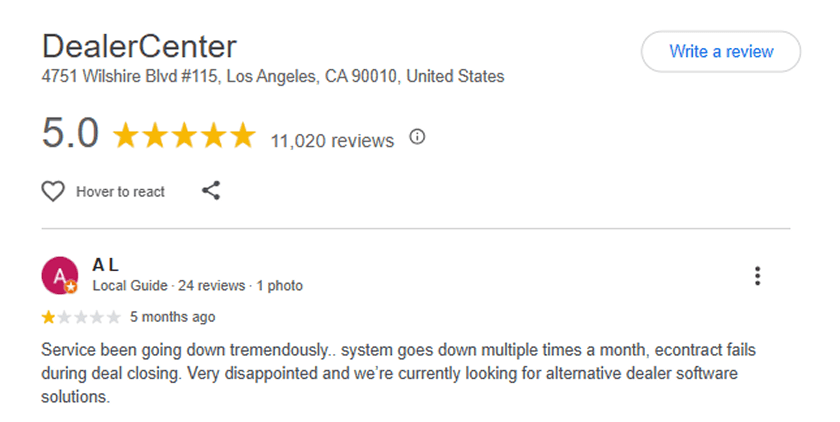
DealerCenter fits lots that value speed over analysis. It starts to strain when inventory decisions need tighter financial context. The interface shows its age, and downtime complaints come up in reviews.
6. Spyne
Best For: Dealers focused on faster photo workflows and visual consistency across inventory listings.
Spyne approaches inventory from the imaging side. Dealers like AI-assisted photo cleanup, standardized backgrounds, and faster listing readiness. Reviews highlight better click-through rates once photos improve, especially on third-party marketplaces.
It is not a full inventory control system. With well-designed vehicle inventory management software, you expect to see where each vehicle stands in readiness, cost position, and sale strategy. Spyne doesn’t manage aging, cost basis, or pricing logic. Teams still rely on another system to understand what to price, hold, or move.
7. VinSolutions
Best For: Dealer groups wanting inventory visibility tied closely to CRM activity and shopper behavior.
VinSolutions treats inventory as part of the sales funnel, while many dealers expect auto dealership inventory management software to connect sales, service, and profitability data in one flow. Dealers like seeing which vehicles attract leads, price sensitivity by model, and how listing changes affect engagement. Reviews often mention better coordination between sales managers and marketing teams.
Where it falls short is operational depth. Recon tracking, cost buildup, and aging controls are limited. Inventory decisions lean more toward demand signals than lot-level realities. Smaller independents say it feels CRM-first, inventory-second.
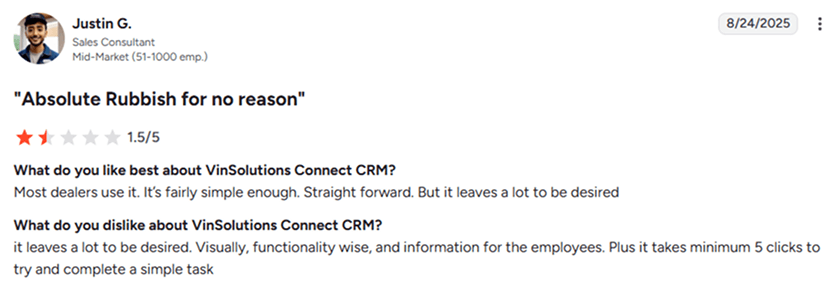
Users also mention that everyday actions can feel inefficient, with simple tasks requiring multiple clicks and navigation, which slows down workflows for teams handling high inventory volumes.
8. eBizAutos
Best For: Dealers prioritizing fast listing syndication across marketplaces with basic inventory controls.
eBizAutos focuses on getting vehicles online quickly. Dealers like one-click publishing to Facebook Marketplace, eBay Motors, and classifieds.
Inventory management itself is light because a capable automotive inventory management software should go beyond listings and photos to give dealers visibility into cost, movement, and aging. With eBizAutos, aging visibility, recon stage tracking, and true cost tracking are limited. Pricing tools are basic and rely on external judgment. Reporting helps with listing coverage, not inventory health.
Included because online visibility matters, but eBizAutos works best as a distribution layer.
9. Lotlinx
Best For: Dealers managing large used inventory who want AI-driven VIN performance insights.
Lotlinx analyzes how each VIN performs across markets and adjusts advertising spend based on performance. Dealers like visibility into which cars need help and which sell on their own. Reviews point to better allocation of ad spend by VIN.
The downside is dependency. Lotlinx doesn’t manage inventory directly. Pricing, recon, and cost control still live elsewhere. A good used car dealership inventory management software should reflect recon work and cost differences so dealers can price confidently. Some dealers feel locked into its methodology once adopted.
It earns inclusion for inventory optimization, not inventory ownership.
10. EverLogic
Best For: Small independent dealers needing simple inventory, sales, and scheduling tools.
EverLogic keeps things straightforward. Dealers like basic vehicle tracking, deal flow visibility, and minimal setup. Reviews mention it works well for low-volume lots with limited staff.
As inventory grows, cracks show, because a robust car dealer inventory management software should make it easy to track what is pending, what is ready, and what needs attention immediately. Aging analysis, recon workflows, and pricing tools are shallow. Reporting often requires manual cleanup. Mobile use is functional, not fluid.
11. AutoAction
Best For: Texas-based BHPH dealers needing inventory tied closely to contracts and collections.
AutoAction connects inventory to buy-here-pay-here workflows. Dealers like seeing vehicle status alongside payment schedules, titles, and customer history. Reviews mention it works well for lots where inventory decisions depend on loan performance.
You would expect a strong-fit auto dealer inventory management software to show days on lot, pricing position, and cost buildup without relying on back-office reporting. Here, inventory depth is narrow. User-Pricing intelligence, aging analysis, and recon tracking are limited. The UI feels dated, and mobile use is basic.
12. Frazer DMS
Best For: Small independent dealers wanting simple inventory tracking without steep learning curves.
Frazer is widely used because it’s familiar. Dealers like easy vehicle entry, basic photo uploads, and straightforward inventory lists, though a mature car inventory management software should give clarity on each unit, not just a list of cars.
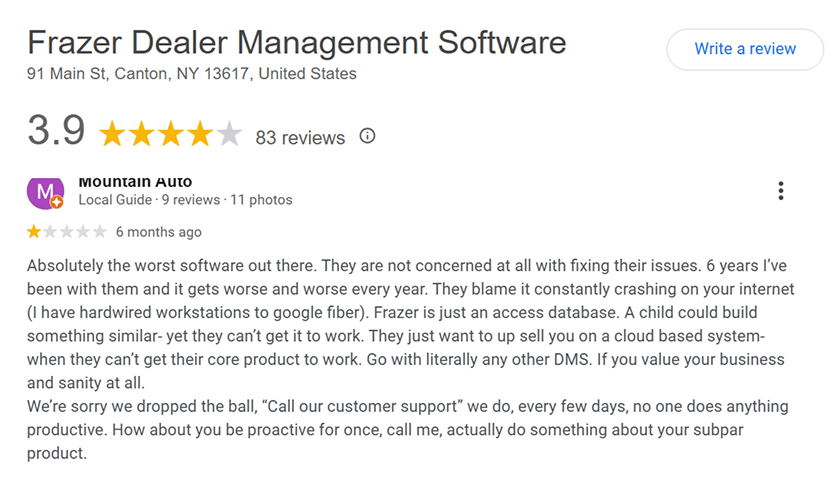
However, inventory updates are not real-time cloud-native, mobile use is clunky, and aging or recon insight is minimal. Pricing decisions rely heavily on dealer instinct.
Frazer fits lots starting out. It struggles once inventory volume and financial tracking grow.
Here’s a Google review highlighting the customer experience with Frazer DMS:
13. Wayne Reaves
Best For: Regional independent dealers needing inventory tied to deal processing and compliance.
Wayne Reaves handles inventory, deals, and forms within a single system. Dealers value predictable workflows and clear vehicle records linked to paperwork. Reviews often highlight long-term reliability.
Inventory exists mainly to support deal processing. Strong car dealer inventory management software should make it easy to track what is pending, what is ready, and what needs attention in real time. Here, pricing tools are limited, recon tracking is manual, and reporting feels dated. Expanding beyond core inventory functions is difficult.
It belongs on this list for stability, not modern inventory control.
14. Dealertrack
Best For: Dealers needing inventory tied closely to compliance and financing workflows.
Dealertrack manages inventory alongside deals, registration, and financing processes. Dealers value accuracy when handling paperwork-heavy transactions and regulatory requirements.
.png)
Inventory exists primarily to support compliance. A practical fit automotive inventory management software should align with dealership workflows and support day-to-day decisions. Here, inventory views focus more on documentation than operational insight. Pricing visibility, aging clarity, and recon tracking are limited.
It is included as a compliance-driven inventory system, not for inventory decision-making. Independent dealers often find the system complex and costly, with limited mobile usability.

15. AutoStar Fusion
Best For: BHPH dealers needing inventory visibility aligned with financing and customer risk.
AutoStar Fusion connects inventory to customer payment behavior. Dealers value seeing which vehicles are tied to higher-risk loans. For non-BHPH dealers, inventory tools feel restrictive. Pricing flexibility, recon workflows, and merchandising are secondary. The system assumes financing-first operations.
Watch out: We did not find enough recent reviews from the past year to form a reliable assessment of current user experience.
16. AutoManager
Best For: Used car dealers wanting inventory, website, and listings managed from one system.
AutoManager focuses on combining inventory with website publishing. Dealers can add vehicles once and push them live quickly with photos, descriptions, and listing distribution. VIN decoding and basic inventory tracking are included, and the system is easy to use for small teams.
Inventory insight is still basic. A well-built car dealer inventory management software should provide clear aging visibility, recon stage tracking, and pricing signals. Here, those areas lack depth. Aging reports are limited, recon workflows are minimal, and pricing insight relies on manual judgment.
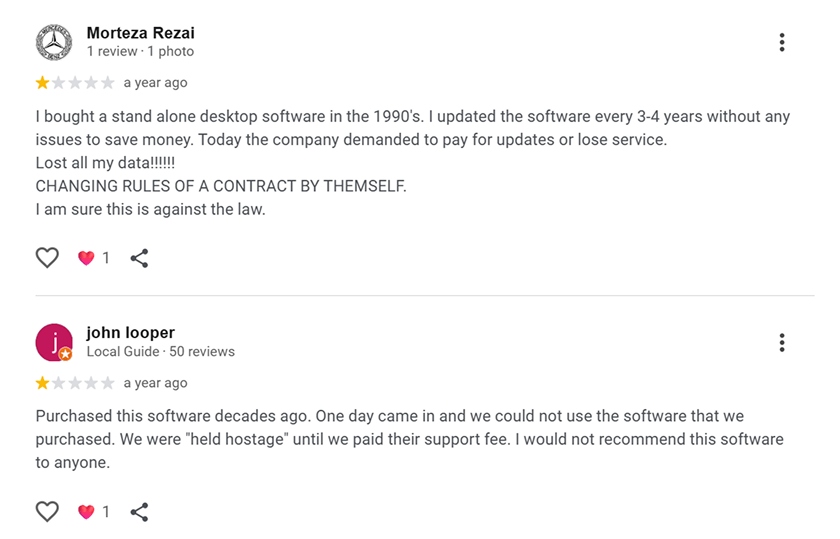
A few user reviews point to challenges with support terms, data access, and changes in pricing policies over time -
17. Blackpurl
Best For: Progressive independent dealers wanting a cleaner inventory and sales experience.
Blackpurl feels newer than most DMS tools and reflects how auto inventory management software should reduce manual tracking, not add another layer to manage. Dealers like visual inventory boards, clearer vehicle status, and smoother sales workflows. Reviews highlight ease of use and quicker onboarding for small teams.
Inventory controls are improving but not deep. Pricing logic, recon cost buildup, and aging insights remain limited.
Quick tip: Ask about photo upload limits and workflow during the demo -

18. Quorum DealerBuilt LightYear
Best For: Dealers needing dealership inventory management software with structured inventory workflows within a broader DMS environment.
DealerBuilt's LightYear is a highly-customizable, enterprise-class customer experience DMS platform. LightYear handles inventory as part of standardized dealer processes. Dealers appreciate consistency across locations and predictable vehicle records. Reviews note solid compliance and audit readiness.
Flexibility is the trade-off. Inventory views feel rigid, and pricing or recon workflows adapt slowly. Smaller independents find it heavier than needed.
19. CDK Global
Best For: Franchise or large dealer groups needing car dealership inventory management software with enterprise-grade inventory control.
CDK’s inventory module supports large volumes, multi-rooftop visibility, and standardized reporting. Dealers trust its stability and depth across departments.
Independent dealers often find it oversized. Cost, complexity, and long onboarding cycles come up frequently in reviews. Inventory decisions feel process-driven rather than dealer-driven. It rarely fits independent used car lots.
20. Reynolds and Reynolds
Best For: Established dealers prioritizing compliance-heavy inventory management.
Reynolds offers tight control over vehicle records, stocking, and reporting. Strong auto dealership inventory management software should improve time to line - how fast a car gets ready for sale. And if cars are getting stuck before listing, recon tools can help identify delays and improve time to line.
Here, the system is dense. Inventory updates are slower, workflows are rigid, and customization is limited. Reviews often mention steep learning curves and high cost.
It is included as a reference point, not a practical choice for most independents.
Note: ERA-IGNITE powers the Reynolds Retail Management System, connecting inventory with sales, service, parts, and accounting within a structured DMS environment.

21. Tekion
Best For: Tech-forward dealer groups wanting inventory lifecycle visibility within a modern retail stack.
Tekion manages inventory as part of an end-to-end retail workflow. A natural fit auto dealer inventory management software should show real-time performance, and that is what dealers value here. The system offers a cleaner UI and faster updates across listings and deals, with fewer batch delays.
For independents, it can feel oversized. Cost, onboarding effort, and feature density come up often. Inventory workflows align more with franchise operations than lot-level flexibility.
Sharing a real discussion from service advisors using Tekion. Useful to see how the product holds up in day-to-day operations beyond demos. Quick note: verify karma points and comment history before taking any feedback at face value.

22. IDS Astra
Best For: Multi-location dealers needing centralized unit tracking and reporting.
IDS Astra focuses on consistency across rooftops. Dealers value standardized inventory records and consolidated reporting. Reviews highlight reliability for larger operations.
.png)
Inventory exists to support scale and reporting. A well-rounded auto dealer inventory management software should provide pricing signals, recon visibility, and aging insight for daily decisions. Here, workflows feel rigid. Pricing signals, recon stages, and aging analysis are limited. Smaller dealers often find it heavier than needed. It fits scale-driven inventory management, not speed-driven lots.
23. PBS Systems
Best For: Dealers needing structured inventory within a full DMS environment.
PBS supports inventory tracking, stocking reports, and compliance workflows. Dealers trust its stability and reporting depth.
Inventory is built around structured processes. An ideal auto dealer inventory management software should reduce dependency on back-office reporting. Dealers want to know what they are making in real time, not after the month closes. But here, flexibility is limited, inventory updates move slower, and pricing workflows are process-heavy. Reviews mention longer onboarding times.
It belongs here as a traditional DMS reference, not a nimble inventory tool.
24. Carsforsale [dot] com
Best For: Small lots needing basic inventory listings tied to a dealer website.
Carsforsale makes it easy to list vehicles online. Dealers like quick uploads and bundled website options.
Inventory exists mainly for online visibility. A right-fit auto dealership inventory management software should provide aging insight, pricing logic, and cost tracking. Here, those capabilities are minimal. Reviews often describe it as a website-first tool with basic inventory support.
It is included because many dealers start here before outgrowing it.
Quick Summary: Which Inventory Software Fits Your Dealership
Not every inventory system fits the same dealership. Use this quick summary to match your inventory needs with the right software.
How to choose the right inventory management software for dealerships
Inventory software for used car dealerships must reflect real-time costs, status, and market position. Recon, service, and holding costs should update the vehicle record as they happen. Pricing decisions should connect directly to what the car actually costs, not what it cost at purchase. Delays create mispricing and margin loss.
Every inventory management system in this list solves a different part of the problem:
- Faster listing and syndication
- Market-based pricing and demand signals
- Compliance and deal processing
- Service and recon tracking
- All-in-one buy-to-sell visibility
Before choosing any platform, ask:
- Does recon update vehicle cost in real time?
- Can I see days on lot and true cost together?
- Am I pricing based on market data or guesswork?
- Can I identify which cars are stuck and why?
- Do inventory, service, and accounting reflect the same numbers?
Inventory management software for used car dealerships must handle constant movement. Inventory only sells when leads convert. If you are relying on delayed updates or separate systems to understand cost and status, the system is slowing down your decisions.
dealr.cloud approaches this by connecting inventory, recon, service, lead management and accounting in one system, so cost and status update together from buy to sell.
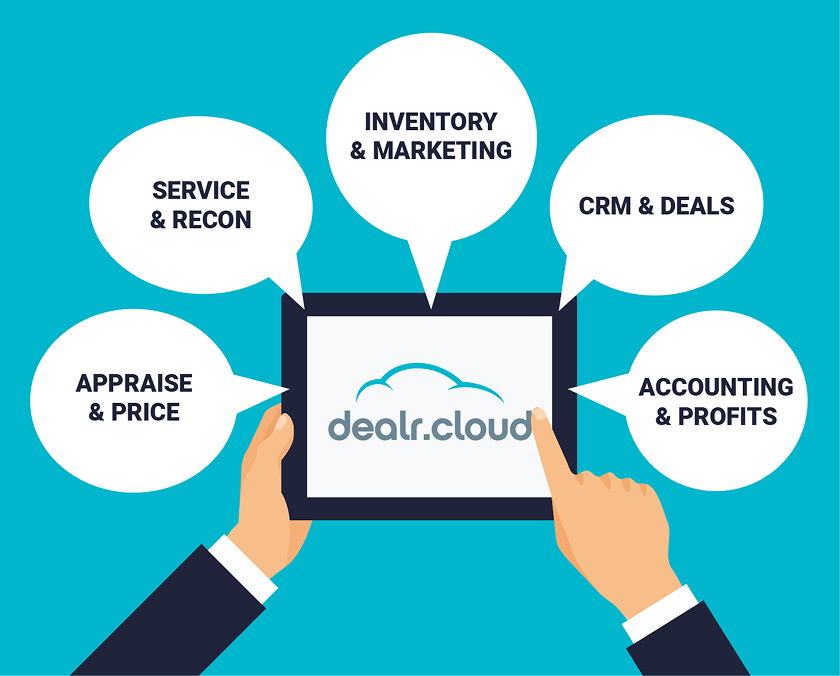
That visibility helps dealers price with more confidence and act faster on what needs attention.


.png)
%20isn%E2%80%99t%20as%20Disruptive%20for%20You%20Think.png)