
Franchise-Level Accounting and Service DMS - Without the Franchise Overhead

March 20, 2026
5 min read
Franchise dealers have long had access to enterprise-grade DMS platforms - systems where accounting, service, inventory, and deal management work as one. Independent dealers have watched from the outside, assuming that level of capability came with a price tag that simply didn't make sense for their operation. In many cases, they were right. But understanding what those systems actually cost - and what the alternatives offer - is worth a closer look.
What Is Franchise Overhead, Really?
Franchise overhead refers to the full cost of operating with enterprise-level systems and processes - not just the software license, but the implementation fees, per-module charges, third-party integration costs, ongoing maintenance, and the internal staff time required to manage and reconcile across those systems. Let's take a look at how much franchise-level DMS costs.

How Much Does an Enterprise DMS Actually Cost?
When independent dealers look at what franchise-tier platforms charge, the first number - the annual license - is usually somewhere between $12,000 and $24,000 per year. That alone is a significant commitment. But the license is just the starting point.
Onboarding fees are where the gap widens fast. Depending on the platform, implementation costs can run anywhere from $1,250 to $10,000 upfront, billed before your team has logged a single deal on the new system. Some platforms have made onboarding more competitive, but the higher end is common among the legacy names.
Then come the costs that don't appear in the first conversation. Data extract fees, third-party integration charges, and per-module add-ons can add hundreds of dollars per year on top of the base license.
When you run the math on year one alone - license plus onboarding plus minimum hidden fees for a 10-user setup - the total for a franchise-tier DMS lands anywhere from roughly $25,000 to over $34,000, and that's before any variable third-party data costs are factored in.
Maintenance also requires internal effort. Complex systems often require:
- IT oversight
- system administration
- process training for staff
For a franchise group spreading that cost across multiple rooftops and a large accounting team, it's manageable overhead. For an independent dealer running a 60- or 80-unit lot, it's a different calculation entirely. The question isn't whether those platforms are capable - many are - it's whether the cost structure makes sense for the size and margin profile of an independent operation. Connected, accounting-inclusive DMS functionality doesn't have to come at enterprise pricing.
How Can Independent Dealers Run Like Franchise Stores - Without the Franchise Overhead?
The operational gap between franchise dealers and independents isn't really about size. It's about system design. Franchise stores run efficiently because their tools are connected - not because they have more staff.
When accounting knows what service did, and service knows what inventory needs, decisions happen faster and with fewer errors. The good news is that the underlying capabilities - connected accounting, real-time cost visibility, integrated service tracking - aren't exclusive to enterprise platforms anymore.
There are three areas where the gap tends to show up most clearly for independent dealers -
1. Cost visibility from buy to sold
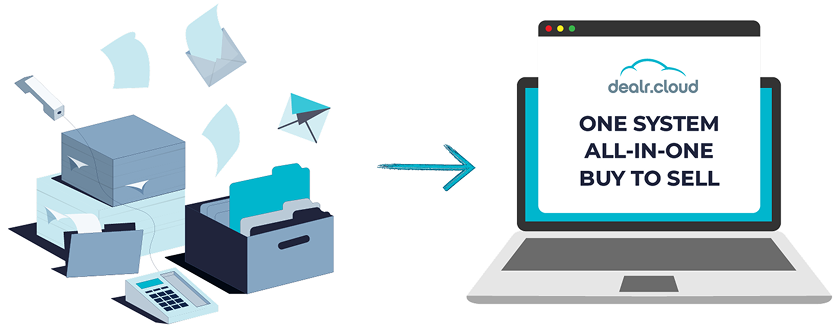
Franchise dealers know a vehicle's true cost - acquisition, transport, recon, flooring - before it's priced for the lot. For independents relying on disconnected tools, those numbers often come together after the fact, sometimes after a deal is already done. A system that connects service through to accounting automatically closes that gap - every repair order, every part, every labor hour posts to the right vehicle record in real time, before the car gets priced. dealr.cloud is built around exactly this workflow, where recon costs flow from the service bay into the vehicle's cost of sale - no re-keying numbers into a second system, no end-of-day data entry catch-up, no cost omitted because someone forgot to post it.


"We've been in business for 54 years and have grown from five cars to 70. As the business grew, our systems were piecemeal, didn't fit together, and were inefficient. We finally found dealr.cloud, and it was the best thing I've ever seen."
2. Accounting that reflects today, not last month
Many independents still depend on a bookkeeper to tell them how much they made - and that report often arrives weeks after the fact. Franchise dealers have always had on-demand P&L visibility by department and by deal. That kind of financial clarity doesn't require an enterprise budget. dealr.cloud keeps accounting inside the same platform, so ownership can see deal-level and lot-level profitability without waiting on anyone.
3. Lead response and first contact speed
Franchise stores have dedicated internet sales teams and CRM workflows that trigger the moment a lead comes in. Independent dealers are often working leads manually - a notification arrives, someone follows up when they get a chance, and by then a competing dealer may have already made contact. A system with built-in lead capture and automated first-response workflows removes that dependency on someone remembering to follow up. dealr.cloud's built-in CRM handles inbound lead flow with texting built in, so the first response goes out fast - without the dealer principal having to manage it personally.
What Goes Into the Total Cost of a Franchise-Level DMS?
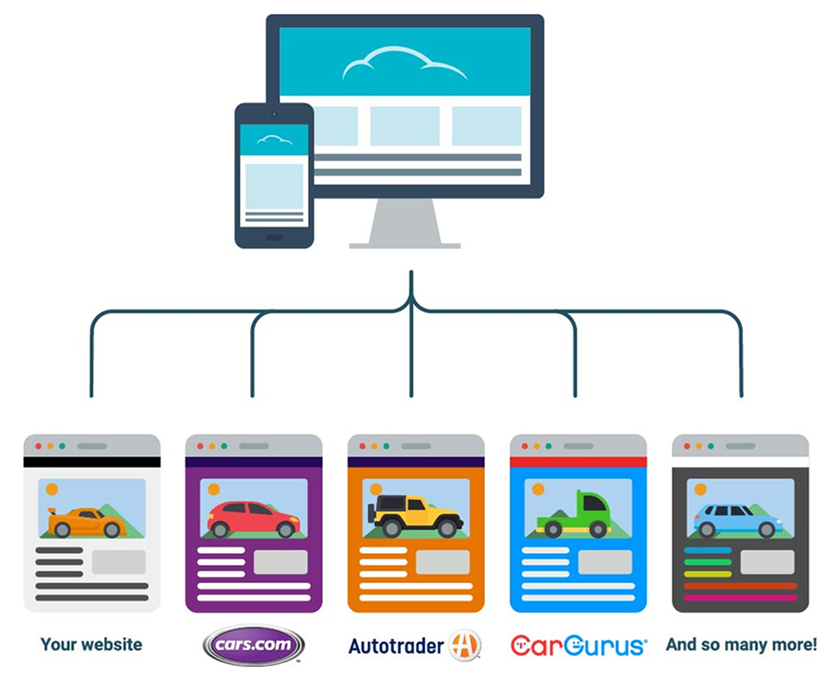
For independent dealers evaluating a platform, the total cost of ownership (TCO) spans hard costs like licensing and onboarding, recurring fees for integrations and data access, and the less visible but equally real cost of staff time spent managing what the system doesn't connect automatically.
Get full dealership control, without the enterprise cost burden
Running a dealership well doesn't require an enterprise budget - it requires the right system. Independent dealers who close the gaps between service, accounting, inventory, and lead management operate with the same clarity that franchise stores have always had. dealr.cloud gives independent dealers full dealership control, from buy to sold, without the cost burden of enterprise platforms.
The dealers who will compete at the highest level now won't necessarily be the largest. They'll be the ones running on current information, making faster decisions, and not leaving margin on the table because their systems couldn't talk to each other.
.png)

%20isn%E2%80%99t%20as%20Disruptive%20for%20You%20Think.png)