
11 Popular Vehicle Recon Software for Used Car Dealers

February 2, 2026
23 min read
Vehicle recon software helps dealers answer one question quickly: can this pre-owned car be listed today or not?
Buying a car at auction is only the first step. Before listing it, the vehicle must be inspected, repaired if needed, photographed, and priced carefully so the dealer can protect margin while still attracting serious enquiries.
Car recon software helps track this preparation stage by showing the real-time status of every vehicle. Without the right recon software, cars often stay in the recon stage longer than they should, or recon costs are not attributed accurately to each vehicle. By the time the car is listed for sale, floorplan interest may already be affecting margin. In some cases, recon costs are discovered later, after the vehicle has already been sold.

The challenge is that not all recon tools solve the same problem. Some focus on inspections, others on workflow coordination, and some emphasize reporting and analytics. The right choice depends on how your dealership actually runs recon today.
Let’s look at some commonly used vehicle reconditioning software options and understand which tools may be a better fit for your dealership.
1. dealr.cloud
Best For: Independent dealers wanting recon tied directly to inventory, service, accounting, and frontline timing.
Vehicle recon software works when it follows a single car end to end. From auction intake to service work to photos. dealr.cloud treats recon as part of the vehicle’s full lifecycle. Vehicle lifecycle management matters when dealers follow a car beyond purchase.
Dealers can track a car from acquisition through inspection, service work (labor and parts), photos, and frontline readiness in the same system used for inventory and accounting. Recon flags, mobile VIN scanning, and service tickets stay connected to vehicle cost, preventing surprises during pricing or deal structuring.
This approach appeals to independent dealerships that prefer one operating system instead of several disconnected tools.
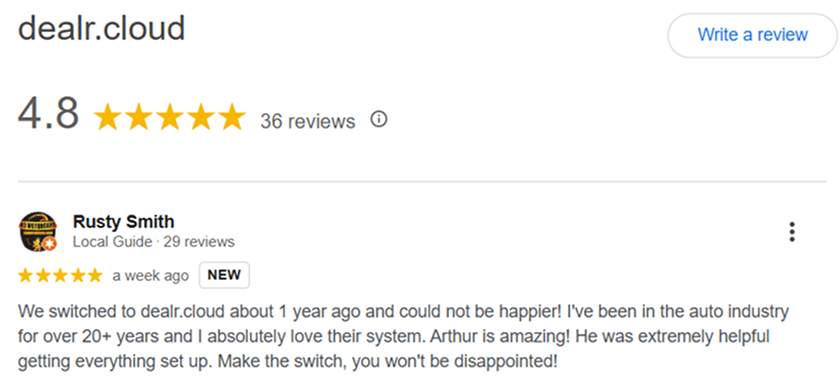
Here’s a real Google review shared by a verified customer about dealr.cloud:
2. Rapid Recon
Best For: Mid-sized dealerships that want structured recon stages and strong status visibility.
Rapid Recon focuses on tracking vehicles as they move through defined reconditioning steps.
Used car dealer software should answer simple questions quickly: What’s still pending? Can it be listed today? With Rapid Recon, managers can quickly see:
- which vehicles are waiting for service
- which units are ready for photos
- which cars are stalled in recon
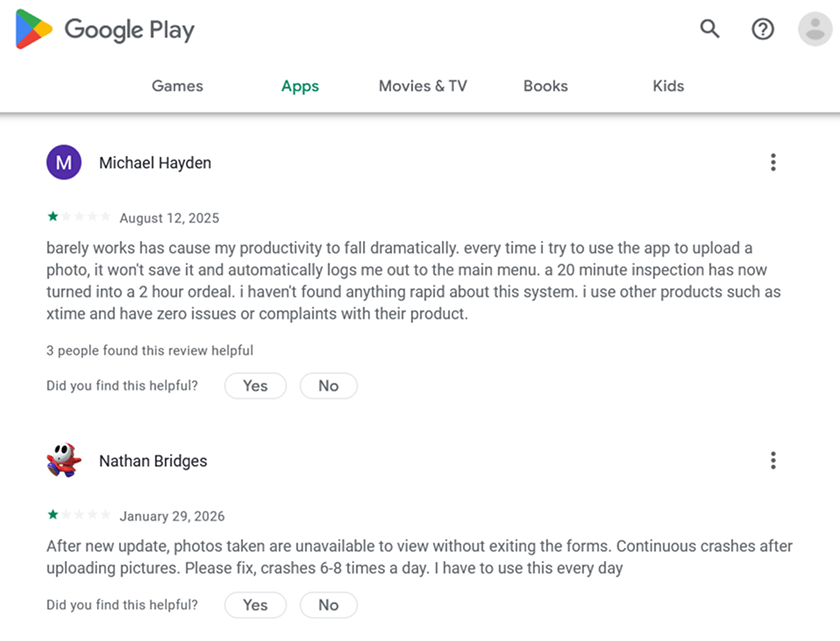
Before choosing Rapid Recon, dealers should evaluate how stable the mobile app is during daily inspections and photo uploads. Some users report crashes, slow uploads, and workflow interruptions, which can slow the recon process if the app is used heavily on the lot. Pricing can also feel high for recon-only software, starting at around $750 per month.
3. Carketa Recon
Best For: High-volume independent dealers that want customizable recon workflows
Carketa Recon is known for allowing dealers to configure recon stages based on how their service process actually works. In many car dealerships, vehicles move back and forth between vendors, service bays, and detail departments. Carketa allows these stages to be customized.
Unlimited users make it easier to involve service writers, vendors, and managers without license friction. Analytics around days-in-stage help pinpoint bottlenecks that cost floorplan interest. Its pricing is lower than Rapid Recon.
However, some users note the interface feels busy at first, and training is required to get value from reporting. Mobile experience is improving but not as polished as recon-first apps.
4. ReconPro
Best For: Dealerships that rely heavily on mobile inspections during intake and reconditioning.
ReconPro has been highlighted for fast VIN scanning, photo-based inspections, and simple estimate creation. It helps catch recon issues early, especially during trade-ins or auction arrivals.
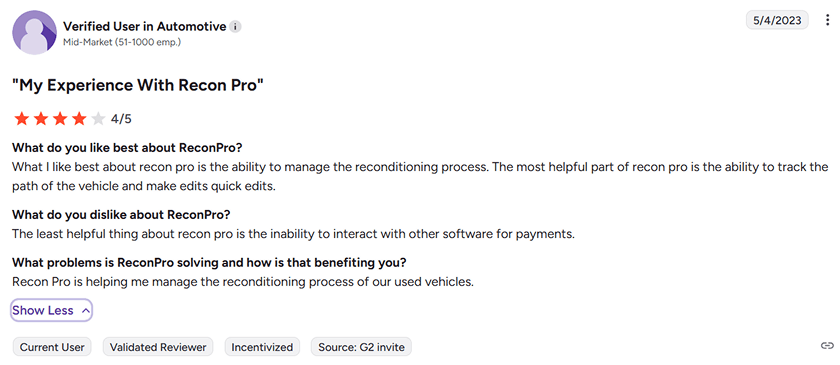
However, limits show up in reporting depth and cross-department visibility. Dealers say it works well for inspections but needs another system for full recon tracking. Custom workflows are basic, and larger stores may outgrow it. ReconPro fits best as a frontline inspection tool rather than a full recon command center.
Some users also report that recent app updates caused interface issues, including enlarged layouts and buttons hidden behind the navigation or status bar, making the app difficult to use. Payment integration too could be an area of improvement -
5. PrepMyVehicle
Best For: Small independent dealers needing simple recon checklists without complex setup
PrepMyVehicle focuses on straightforward task tracking rather than complex recon analytics. Dealers can create checklists for vehicles before they reach the lot, helping ensure that steps such as inspections, repairs, and detailing are completed consistently.
This simplicity is also the limitation. Reporting is light, analytics are minimal, and scaling beyond basic recon tracking is hard. Dealers with multiple vendors or locations often outgrow it quickly. The tool works well for smaller lots where recon coordination is simple and teams want structure without major system changes.
One red flag is that there aren’t many substantial public reviews available for PrepMyVehicle. However, the company offers a free trial, allowing dealers to test the checklist-based recon workflow before committing to a subscription.
It’s important to remember that reconditioning software for dealers becomes valuable when it exposes delays early, not after the car has already burned two weeks of floorplan interest. Dealers want early flags so they can take corrective action in time. A checklist approach alone may not fully solve this problem.
6. iRecon (vAuto)
Best For: Dealers already using vAuto inventory tools
iRecon works within the vAuto ecosystem, connecting recon tasks to vehicles already managed inside vAuto. This allows recon status to appear alongside vehicle inventory data.
Dealers say workflows feel rigid compared to standalone recon tools. Custom stages are limited. Dealership software tools lose credibility when they feel built for someone else’s business. Dealers can tell quickly if a tool understands service bays, vendors, and recon pressure. iRecon’s user interface reflects vAuto’s broader system complexity.
Additionally, smaller independent dealers often feel iRecon is bundled pricing-wise with tools they don’t fully use.
Clarification: Stockwave and iRecon are both software solutions under the vAuto (Cox Automotive) umbrella, but they serve different, sequential roles in the automotive inventory lifecycle. Stockwave is designed to find and buy vehicles (sourcing), while iRecon is designed to manage the repair and reconditioning process after a vehicle is purchased (reconditioning)
7. Simple Recon
Best For: Independent dealers needing centralized recon notes, costs, and vendor tracking.
For many dealers, the right car dealership inventory software means keeping all vehicle-related records in one place, including photos, service invoices, vendor notes, and recon costs. Simple Recon focuses on keeping recon documentation organized and provides an easy-to-follow workflow grid.
Where it falls short is automation. Alerts are limited, workflows are manual, and recon stages require discipline to maintain. Reporting works but lacks drill-down detail. Dealers need a repair ticket management system to tie every labor hour and part back to a specific vehicle, not floating in service records / whiteboards.
Like PrepMyVehicle, there aren’t many substantial public reviews available for Simple Recon.
8. ReconRelay
Best For: Dealers tracking recon delays, aging inventory, and true holding costs per vehicle.
ReconRelay emphasizes financial accountability during recon.The platform connects time-in-stage metrics with holding costs, helping dealers see how recon delays affect profitability. For stores carrying high-value inventory, this visibility can help owners intervene earlier.
Some users say onboarding requires walkthroughs, and mobile access is limited. It’s less about inspections and more about accountability. Pre-owned vehicle reconditioning can’t ignore information delays. ReconRelay fits dealers who already understand recon flow and want tighter financial pressure on slow-moving inventory. ReconRelay is relatively expensive, with plans starting at $599 per month, while the recommended plan costs $699 per month.
9. DealerCenter
Best For: Independent dealers wanting recon visibility inside their DMS
DealerCenter is widely used by independent dealerships as a dealership management system. Recon tasks can be tracked alongside vehicle inventory, pricing, and deals. Its entry cost is lower than most franchise systems.
However, the tradeoffs show up as scale increases. Auto service management tools become critical when recon volume grows. With DealerCenter, recon workflows are basic, reporting is limited, and downtime complaints surface in reviews. Dealers with multiple rooftops or complex vendor setups often outgrow it. DealerCenter works best for small to mid-sized lots that value convenience over deep recon analysis.
10. Shopmonkey
Best For: Dealerships where most recon work happens inside the service department.
Shopmonkey is primarily a shop management platform used by service departments and independent repair shops. Some dealerships use it to manage reconditioning work because it provides clear repair orders, technician assignments, and parts tracking during the recon stage.
The limitation is that Shopmonkey is not designed specifically for dealership recon workflows. It does not connect directly with inventory, pricing, or deal records the way dealership management systems do. Dealers may need another system to track vehicle status from acquisition to listing.
11. vAuto Provision
Best For: Dealers who want recon visibility connected to inventory pricing and market data.
vAuto Provision is primarily an inventory management and pricing platform used by many dealerships to analyze market demand and price vehicles competitively. Some dealers use it alongside recon tools to prioritize which vehicles should move through reconditioning faster based on market conditions.
vAuto Provision allows managers to view inventory performance metrics such as market supply, pricing position, and vehicle turn. This can help dealerships decide which cars should be pushed through recon first. However, vAuto Provision is not designed as a recon management platform. Workflow tracking, vendor coordination, and repair stage monitoring are limited compared to recon-first tools.
vAuto Provision can be expensive for independent dealers, as pricing is customized and often bundled with other Cox Automotive products.
Other Recon Tools Not Included in This List & Why?
There are several other tools used in the dealership ecosystem that sometimes appear in discussions around recon workflows. Examples include Carbly, Laser Appraiser, Spyne, ReconCloud, DealerSocket, and Dabadu XRM, among others.
These tools were not included in the list above for one primary reason: they are not designed primarily as vehicle reconditioning management platforms.
Many of them focus on adjacent areas such as:
- vehicle appraisal during acquisition
- photo automation and merchandising
- CRM and dealership workflow management
- inventory pricing or analytics
While these platforms can support parts of the recon process, they typically require another system to manage the full reconditioning workflow from inspection to frontline readiness.
Our curated list focuses on tools that dealers commonly use to track recon stages, manage service work, and monitor vehicle readiness before listing. Auto repair tracking for dealerships matters when dealers want to know what’s being fixed, how long it’s taking, and whether it’s blocking a sale.
What should dealers look for in recon software?
When evaluating vehicle recon software for used car dealerships, look beyond feature lists. A practical evaluation starts with visibility and accountability. Used car reconditioning tools have to make the next step obvious.
Ask these questions when reviewing a recon system:
1. Can I see every vehicle’s recon stage on one screen?
2. Are labor, parts, and vendor invoices tied to the vehicle automatically?
3. Can managers check recon status while walking the lot?
4. Does the system track time-to-line for each vehicle?
5. If a car stalls in recon, can I see who owns the next step?
Dealers can’t fix reconditioning delays if they lack granular visibility into each stage. An ideal time-to-line tracking software becomes useful when it highlights patterns. Same vendor. Same delay. Same stage. That’s how owners fix recon problems.
Recon Works When Every Car Stays Visible
Choosing the best vehicle recon software comes down to one outcome – knowing exactly where every car stands without chasing people or piecing together updates. A vehicle reconditioning management software fails when it only shows tasks completed. Dealers want to see what’s waiting, who owns it, and what needs approval to move the car forward. That visibility allows for timely action. There is no single recon platform that fits every dealership.
A small independent lot may need:
- simple checklists
- minimal setup
- clear task visibility
A multi-rooftop dealership often needs:
- vendor coordination
- analytics on recon delays
- recon tied to inventory and accounting
"We've been in business for 54 years and have grown from five cars to 70. As the business grew, our systems were piecemeal, didn't fit together, and were inefficient. We finally found dealr.cloud, and it was the best thing I've ever seen."

The right system depends on how recon actually runs inside your dealership.


.png)

%20isn%E2%80%99t%20as%20Disruptive%20for%20You%20Think.png)