

Why Switching Your Dealership Management System (DMS) isn’t as Disruptive as You Think
%20isn%E2%80%99t%20as%20Disruptive%20for%20You%20Think.png)
May 11, 2026
8 min read
A DMS transition simply means moving your dealership from one system to another.
For many dealers, the stress comes from what could go wrong during the switch. You’re thinking about deals in progress, inventory accuracy, recon status, customer follow-ups, and accounting. Everything is moving at the same time, so changing systems in the middle of it feels risky, and rightly so.

That’s why switching often gets delayed.
Let’s break down what a DMS transition actually looks like and where the disruption really comes from.
1. Why Do Car Dealerships Delay Switching Their DMS?
Many car dealers don’t avoid switching because they don’t see the need. They delay it because it feels disruptive.
You’re already managing inventory, leads, customers, and cash flow. Adding a system change on top of that feels like unnecessary risk. Some of you may also have the memory of past experiences where onboarding took longer than expected or required too much manual effort.

So the thinking becomes simple: “Let’s deal with this later.”
But that delay often creates a cycle. You stay busy managing inefficiencies instead of fixing them. When teams are constantly putting out fires, there’s no space to improve the system itself.
The longer this continues, the harder it becomes to step back and make the change.
2. What Does Switching a DMS Actually Involve?
There’s a perception that switching a DMS means rebuilding your entire operation from scratch.
In reality, most of your workflows stay the same. You’re still buying cars, managing recon, handling leads, and closing deals. What changes is how these steps connect.
The real work in switching is not the software. It’s understanding your current processes and enhancing them into a better structure.
When done right, you are not adding complexity. You are removing unnecessary steps.
The confusion comes when switching is treated as a technical task instead of an operational one. If the focus stays on your day-to-day workflows, the transition becomes far more manageable than expected.
3. Why Many DMS Providers Hand You a Login and a Training Video
Many DMS providers hand you a login and a training video and expect your team to figure things out.
That approach ignores how dealerships actually work.
Your recon flow, pricing decisions, and lead handling are not standard. When onboarding is generic, your team spends time trying to adjust the system to your workflows. That creates delays, confusion, and inconsistent usage across departments.
Instead of improving operations, the system becomes another layer to manage.
This is where most of the frustration around switching comes from. It’s not the switch itself. It’s the lack of structured onboarding that fits how your dealership actually runs.
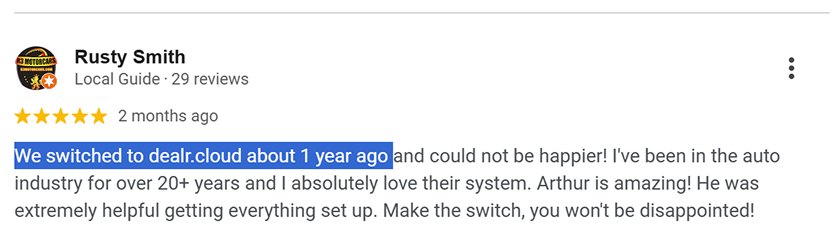
However, at dealr.cloud, things are different - for the better. Take a look at one of the Google reviews -
4. What a Structured Dealership Onboarding Should Look Like
A good onboarding process starts before any system setup begins.
It should begin with understanding how your dealership currently operates. How do vehicles move from acquisition to sale? Where do delays happen? Which steps rely on manual work?
Once that is clear, the system should be configured to match those workflows.
This includes:
- Setting up inventory flow
- Aligning recon stages
- Structuring lead handling
A structured onboarding process matters because it prevents disruption before it starts. Without a clear plan, dealerships often end up with disconnected workflows, inconsistent processes, and teams forced to adapt too quickly.
When onboarding is built around your existing operations, the transition becomes far more manageable. Employees understand where to work, managers maintain visibility, and day-to-day operations continue without unnecessary slowdowns.
The goal is not to teach your team new habits immediately. It’s to make the system reflect what they already do, but in a more connected way.
When onboarding follows this approach, adoption becomes smoother because the system feels familiar from day one.
5. Does Switching Really Mean Downtime?
Switching doesn’t mean downtime. That’s the biggest misconception.
The operational fear is real. Dealers worry about lost deals, delays, and added stress during the transition.
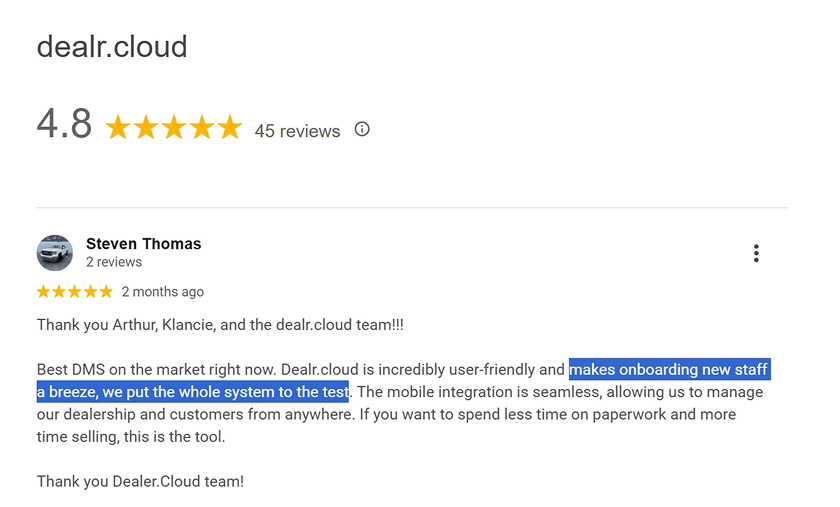
With dealr.cloud’s fast start approach, your workflows are mapped before anything changes. Inventory, leads, and deals continue to move while the system is being set up. Your team gains confidence because the system reflects how your dealership actually runs.
You are not pausing your business.
Instead of disruption, the transition happens alongside your daily operations. The focus is on keeping deals moving while improving how everything connects behind the scenes.
6. How dealr.cloud’s Fast Start Changes Day-to-Day Operations
The difference with dealr.cloud is not just the system. It’s how quickly your dealership starts operating inside it.
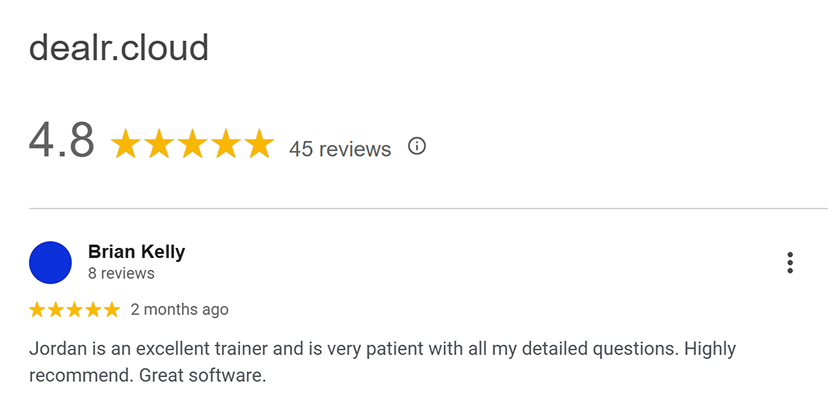
Fast onboarding means your team is not spending weeks figuring things out.
From early on, you start seeing:
- Connected workflows across inventory, CRM, service, and accounting
- Less repeated data entry
- Clear visibility into deals and costs
Your team gains confidence because the system reflects how your dealership actually runs.
7. When Is the Right Time to Switch Your DMS?
There is rarely a perfect time to switch systems.
Most dealers wait for a trigger:
- Growth into multiple locations
- Increasing operational complexity
- After tax season
But waiting too long has its own cost.
If your team is spending more time managing systems than running the dealership, that is already a signal. If decisions are being made without full visibility, the impact is already there.
Switching becomes easier when it is seen as an operational improvement, not a disruption.
The right time is before your current setup starts limiting how efficiently you can run your business – not after you're already feeling it.
“I started dealr.cloud in the backroom of my family’s dealership to solve our own challenges, then introduced it to other dealers. That’s how it grew.”


.png)