

10 Best Accounting Software for Car Dealerships

January 22, 2026
10 min read
Many dealerships already use some form of accounting software. Some rely on accounting built into their DMS, while others use a separate accounting platform connected to their dealership system.
The real question is whether that software actually understands how a dealership makes and loses money. It matters because accounting for a dealership starts long before a sale.
A single vehicle moves through:
- Acquisition
- Recon and service
- Advertising
- Lead handling
- Deal structuring
- Compliance and paperwork
- Final accounting and reporting
Each stage adds cost. Each stage involves different people. Each stage affects profit. Generic accounting tools were not designed for this reality. That’s why it’s worth looking at some noteworthy accounting tools used in dealership accounting.
Best Accounting Software for Car Dealerships
Choosing accounting software for a car dealership is less about bookkeeping and more about how well the system understands dealership operations, especially for independent dealerships.
This guide breaks down what good accounting software for automobile dealers must do today – using real dealership workflows. And if your DMS has built-in accounting, that is definitely worth paying attention to. That is why we start with dealr.cloud -
1. dealr.cloud
Best for: Independent dealers who want real-time financial control
dealr.cloud approaches accounting differently. Accounting is not a separate system – it lives inside the dealership workflow.
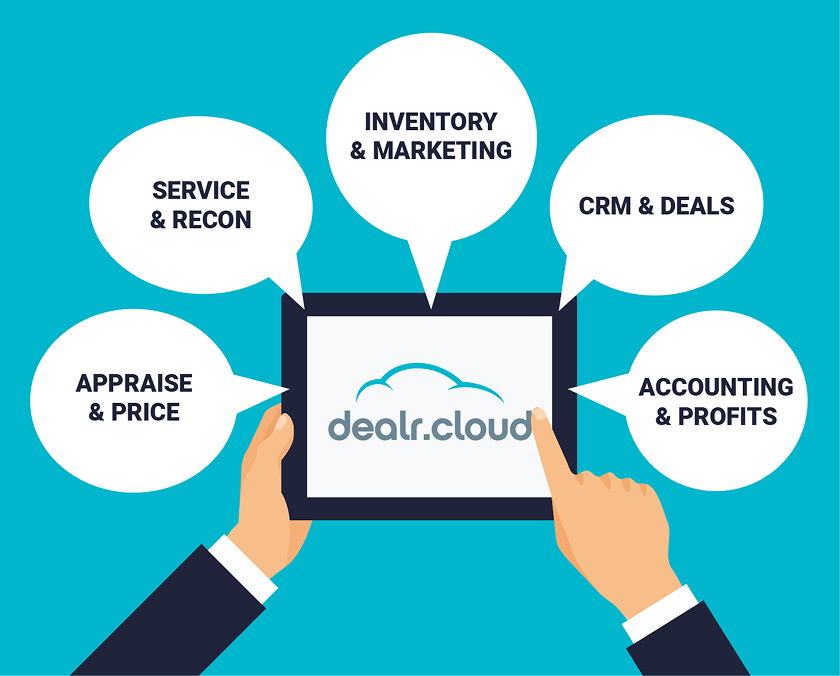
Recon costs update vehicle inventory automatically. Service labor and parts flow into true vehicle cost. Error checks prevent tax, odometer, and address mistakes before deals close.
Lead management connects advertising spend to sold deals.
Instead of waiting for month-end reports, owners see profitability while deals are still active. Sales teams negotiate with real numbers, not estimates. A proper auto dealership accounting system connects service tickets, parts, and labor to the vehicle.

dealr.cloud is built for independent dealerships that want operational governance, financial clarity, and fewer surprises after the sale. Cloud-based accounting software for car dealerships enables real-time visibility. Owners can work from the lot, office, or home without losing accuracy.

It’s important to note that automotive accounting software should know titles, odometers, and tax rules are not optional. These details create expensive problems when systems fail to check them early.
2. QuickBooks Online
Best for: Basic bookkeeping at very small dealerships
QuickBooks Online is a general small-business accounting platform used by some dealerships for bookkeeping and financial reporting.
For independent dealerships operating 50+ vehicles or multiple rooftops, the system often requires additional tools and manual work. Vehicles are not treated as operational assets moving through acquisition, recon, service, and sale. Costs such as recon, transport, or floor plan interest usually need to be tracked separately and entered later.
Because of this, deal-level profitability is often calculated outside the system using spreadsheets or exports from other software. While QuickBooks may work for very small lots with limited inventory, dealerships with higher inventory volumes typically rely on accounting built into their dealership management system so vehicle costs and deals stay connected.
Check out their page for more details -
3. DealerCenter
Best for: Independent dealers running buy-here-pay-here operations
DealerCenter combines DMS features with accounting tools used by some independent dealerships. It supports inventory management, deal structuring, and in-house financing workflows.
The system can feel dense, and onboarding is usually required for teams to use it effectively. DealerCenter is typically used by dealers looking for financing tools alongside their dealership operations.
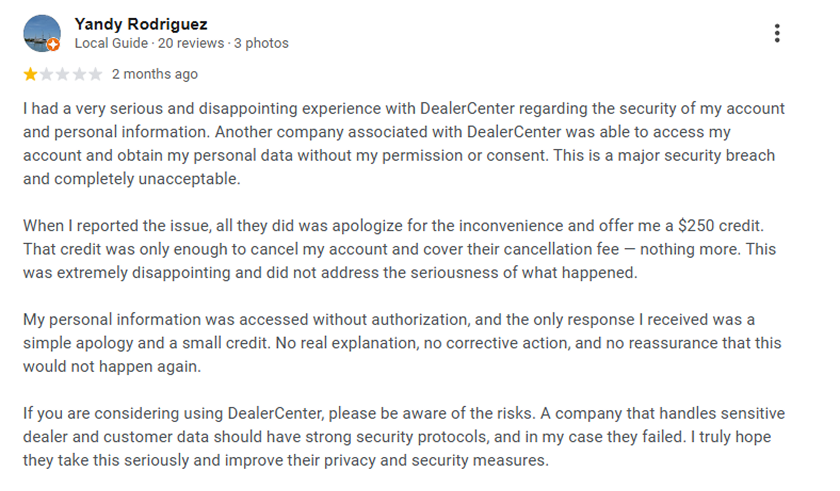
Lesson: Always enquire about system downtime history before choosing any dealership accounting software. Data privacy is also a critical consideration.
4. Dealertrack
Best for: Franchise and multi-rooftop dealerships
Dealertrack accounting software is a dealership management system with integrated accounting, document handling, and compliance tools. It is used by many franchise dealerships and large, multi-department operations.
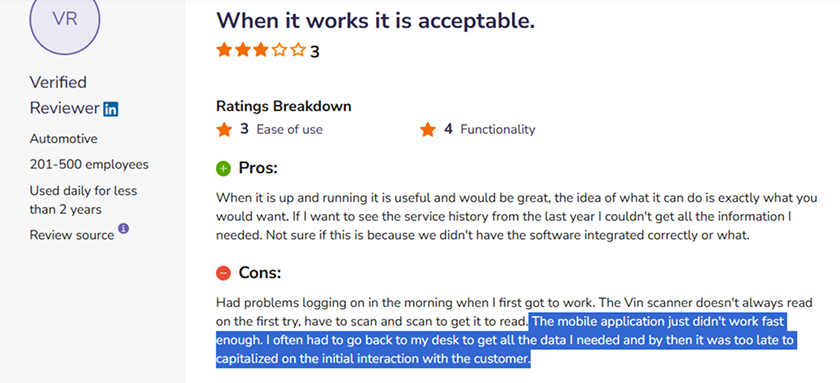
Smaller teams can struggle with setup, cost, and operational overhead.If you use a mobile device to access details when away from your location, you may want to reconsider this tool. Here’s why -
5. Frazer DMS
Best for: Used car lots needing affordable dealership accounting
Frazer DMS is used by many small used car dealerships. It includes inventory tracking, basic accounting, and lender integrations.
The downside is limited modernization. Reporting depth, mobile workflows, and cross-department visibility are not as strong as newer systems. Accounting is present, but not deeply connected to recon or service operations.
Frazer is commonly used by smaller lots that want dealership-specific tools at a lower cost than enterprise systems. An ideal car dealership accounting software (USA) must also handle state-specific tax and title rules.
Caveat: User complaints have increased in the last two years -

6. AutoManager
Best for: All-in-one dealership operations with accounting included
AutoManager combines DMS functionality with built-in accounting used by dealerships. It includes inventory, deal management, recon, service, and buy-here-pay-here workflows.
The platform can come with a learning curve. Pricing varies by module, and teams often need time to adopt the full system.
If you see a product with 99% five-star reviews, be cautious. It is worth reading the one-star reviews carefully to understand recurring issues that high ratings may hide -

AutoManager is used by dealerships looking for a single platform to manage operations and accounting together, provided they invest in training and setup. In an ideal scenario, dealership financial management software should show where money is made and lost by vehicle.
7. Reynolds and Reynolds
Best for: Large US franchise dealerships with OEM requirements
Reynolds and Reynolds is used by franchise dealerships that operate within OEM-mandated processes. It includes manufacturer integrations, compliance tools, and standardized workflows across sales, F&I, service, and accounting.
Accounting is tightly structured, but flexibility can be limited. Custom workflows, rapid changes, or non-standard dealership operations can require additional configuration. Implementation timelines can also be significant.
Reynolds is commonly used by large franchise groups that operate under OEM reporting structures. Accounting software for new car dealerships must support OEM rules and structured reporting. Auto dealer accounting software, whether in the UK or US, must also support local tax structures and regulatory reporting.
8. CDK Drive
Best for: Multi-rooftop dealership groups operating nationwide
The CDK Global accounting system is used by large, geographically distributed dealership groups operating multiple rooftops. It includes centralized accounting and reporting across locations for sales, service, and finance teams.
The system is designed for scale, which can introduce complexity. Smaller teams may find it difficult to manage, and real-time operational visibility may depend heavily on reporting configuration.
CDK Drive is commonly used by dealership groups that operate across multiple locations and maintain standardized processes across departments.
9. Autosoft DMS
Best for: Mid-sized independent US dealerships
Autosoft DMS is used by independent dealerships looking for dealership-specific operational workflows. It includes inventory, accounting, service, and F&I functionality within the same system.
Accounting is integrated, though recon and service visibility may still depend on internal process discipline. Some dealerships may need additional configuration as operations grow.
Autosoft is commonly used by independent dealerships that have outgrown basic accounting tools but do not require enterprise-level systems. Affordable accounting software for auto dealers should reduce operational risk, because inexpensive systems can create higher costs when accounting errors accumulate.
10. DealerSocket (now part of Cox Automotive)
Best for: Dealerships wanting CRM and accounting under one roof
DealerSocket began as a CRM platform and later expanded into dealership management with accounting functionality. It connects customer lifecycle management with operational dealership tools.
Accounting capabilities are available but are often positioned alongside CRM and lead management features. Dealerships focused primarily on financial controls may evaluate how deeply accounting workflows connect to vehicle-level operations.
DealerSocket is commonly used by dealerships that prioritize customer relationship management and want accounting included within a broader operational platform.
This is not an exhaustive list. What matters is that you can now ask better questions and look for signals that help you evaluate the right accounting system for your dealership, whether you operate one location or multiple rooftops.
How to choose the right accounting software for dealerships
The strongest auto dealer accounting solutions scale without adding headcount. That efficiency protects margins as dealerships expand. Inventory accounting for car dealerships must update in real time. Recon, transport, and service costs should never live outside the vehicle record. Vehicle sales accounting should connect pricing, commissions, and cost instantly. Delays create confusion and disputes. While you are looking at accounting software for dealerships, also review the list of must-have DMS features every independent dealer should evaluate.

Every system we shared in our list solves a specific version of the problem:
- OEM compliance
- Enterprise control
- Simplicity for small lots
- Accounting depth at scale
- Integrated All-in-One Buy-to-Sell System
Before choosing any platform, ask these questions:
- Does recon update inventory cost automatically?
- Can accounting see what service and sales are doing today?
- Are deal errors prevented or discovered later?
- Can I trace a sold car back to its true cost?
- Do leads, deals, and dollars connect in one system?
Accounting software for used car dealerships must handle constant inventory churn. If accounting answers arrive weeks later, the system is working against you.


.png)

%20isn%E2%80%99t%20as%20Disruptive%20for%20You%20Think.png)