

Why do growing dealerships outgrow their systems faster than expected?

December 23, 2025
10 min read
Most owners of growing dealerships focus on sales, inventory, and keeping operations moving.
Software decisions are not amongst their top priorities. Most dealership owners don’t wake up one day and decide, “We need new software.”
It happens slowly. One missed cost, one outdated sheet, one clunky workflow at a time.
This slow creep is how outgrowing old systems begins. Whether you’re running on spreadsheets, an older DMS, or a collection of tools that never quite talk to each other, you’re not alone. A huge percentage of independent dealerships start with “make-it-work” systems. They’re affordable, familiar, and get you through the early years.
As the dealership grows, the cracks in the system show up. Not because you’re doing anything wrong, but because those tools simply weren’t built for where you’re going next. Your legacy system is slowing down dealership growth, because growth adds complexity - more vehicles, more recon stages, more staff, more money moving every day.
Most patchwork systems hold together because the owner is the glue. The test isn’t day-to-day use – it’s what happens when the owner steps away.
Here’s why growth-minded dealers eventually move on from spreadsheets and older DMS platforms…and what they move toward.
1. You Need Real Numbers, Not Guesswork
Dealers are busy. When costs come in through emails, texts, invoices, parts notes, or someone’s memory, they don’t always make it into the system. Spreadsheets, a stack of disconnected software apps and a less robust dealership management system (DMS) rely on manual data entry for everything.
That means your profit might look great on-screen, but be completely off in reality.
This is one of the earliest signs your dealership has outgrown its legacy DMS. Numbers exist, but confidence in those numbers doesn’t.
Growing dealerships need a system that:
- connects every cost automatically
- calculates true profit per unit
- updates in real time
Good decisions come from good data, not good guesses. At this stage, dealers start realizing that basic car dealership software starts becoming operational risk.
2. Recon Needs More Than Whiteboards and Sticky Notes
A healthy recon process has stages: inspection, mechanical, body, detail, photos, live listing. When you’re managing 10, maybe 20 cars, you can keep a lot of that in your head.
At 30, 40, or more?
You lose track of what’s stuck, what’s waiting, and what’s costing you days of aging.
This is a classic example of challenges with old dealership systems. It becomes foggy.
Dealers growing fast need recon that: shows every vehicle’s status instantly, flags bottlenecks before they get expensive and gives owners visibility from their phone.
Recon delays directly affect cash flow, aging, and turn time. As inventory grows, DMS scalability for dealerships becomes less about features and more about control.
3. Multiple Tools Don’t Equal a Connected System
A lot of dealerships run on some combination of: Google Sheets, QuickBooks, a limited deals platform, texting apps, no CRM or a basic CRM, a website uploader.
It might feel like it’s all there, but in reality, it’s disconnected. Data lives in too many places. Updates get missed. Every version tells a different story. Try taking a 3-day holiday. You’ll quickly find out if your “system” and team can handle the growing operations and moving parts without needing you on the phone.
This is where outgrowing dealership software and systems becomes unavoidable. Patchwork systems will start costing you. A modern DMS solution should replace patchwork with one unified system that handles appraisals, inventory, leads, sales, service, and accounting all in one place. Scalable dealership solutions need to replace stopgap tools.

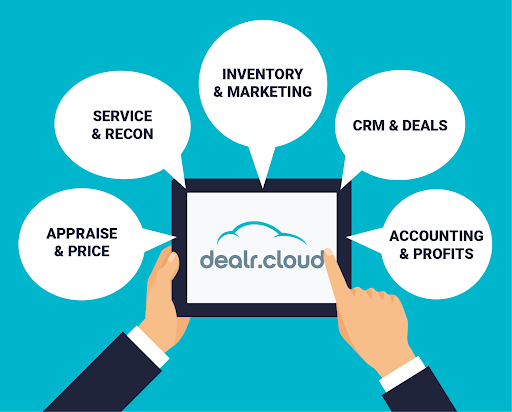
“With dealr.cloud, you’re not just adopting software. You’re building a foundation for the future of your dealership. If you want to make money, support your family, and build something that lasts, you need the right system underneath it all.”
Growth is beautiful. But growth exposes the limits of legacy dealership systems and pushes you to change / upgrade.
4. Adding Locations Makes Gaps Impossible to Ignore
When you add rooftops, service centers, or satellite lots, spreadsheets and older DMS platforms quickly fall apart.
You get multiple versions of the same file, inconsistent inventory, delayed updates, hard-to-track profitability, zero real-time visibility.
This is often the breaking point for DMS for growing dealerships. Expansion exposes structural weaknesses that single-location setups could mask.
Growing dealers need to see the whole operation. Every location, every unit, every team, without switching between files. Dealers seeking to scale can’t wait for the month-end to learn how the business performed.
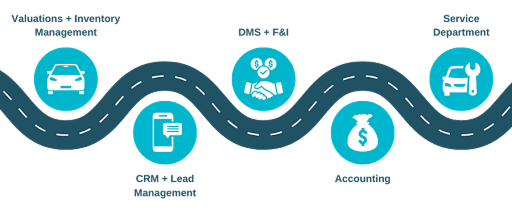
“With dealr.cloud, independents get more than features. Everything you need to run your entire dealership in one system, with true operational and financial visibility.”
Growing lots and expanding to more locations means you’ll need easy-to-access, real-time updates every single day. You can’t expect to travel daily to different locations or manage back-end operations while a potential customer has walked in. This is one of the clearest signs your dealership has outgrown its legacy DMS and patchwork system.
5. Errors Are Expensive – And Preventable
Wrong address.
Wrong tax rate.
Mismatched VIN.
Missing signatures.
Spreadsheets and legacy systems don’t prevent errors; they simply store whatever is typed in. Fixing mistakes later wastes hours, frustrates customers, and can cost you. Sometimes you realize the cost of these mistakes weeks later.
These are not outlier cases. They are recurring challenges with old dealership systems, especially as volume increases. Dealers growing their volume need systems that:
- validate data instantly
- prevent costly mistakes
- connect inventory, sales, service, and accounting
This is where many dealers finally ask why dealership systems become outdated. The answer is simple - they were built to record information, not protect operations at scale.
6. Leads Can’t Sit in Spreadsheets or Inboxes
Independent dealers spend real money on marketing. But if leads sit in inboxes, spreadsheets, or paper notes, you lose opportunities without even realizing it. See those leads as a function of conversion probability × revenue potential × profit margin.This is a hidden cost of outgrowing old systems. A better dealership lead management system:Better follow-up = more sold cars. It’s that simple.At higher volumes, manual lead handling becomes a bottleneck. This is where modern car dealership software must support the process, not rely on muscle memory or hustle alone.
- captures every lead automatically
- stores all leads centrally, along with their source
- assigns each lead to the right person
- tracks every follow-up
- shows what’s working (and what’s not)
7. Speed Matters, Especially With Inventory
Uploading a vehicle shouldn’t take an afternoon. Typing VINs, uploading and renaming photos, double-checking data, waiting for your site to refresh…By the time everything is finally listed, your competitor’s car might already be receiving leads.A better platform publishes inventory using minimal manual steps. When turn time matters, and it always does, speed becomes your competitive edge.This is where dealership growth and technology intersect directly with revenue. Slower systems quietly cost deals.So… why should growing dealerships elevate their technology and upgrade their systems to keep pace with the business they’re becoming? Not because their old tools were bad. Because their dealership has evolved, their operations have expanded, and their old tools simply can’t keep up. Growth requires:
- clearer numbers
- tighter workflows
- better recon tracking
- reliable accounting
- consistent lead follow-up
- real-time inventory
- one source of truth

Dealers who want to scale eventually realize they need one connected dealership management system (DMS) – not a dozen disconnected tools.
A Better Way Is Absolutely Within Reach
You don’t need to overhaul everything at once. Most growing dealerships struggle because the business changed, while the systems stayed the same.
Growth adds pressure in quiet ways. More cars in recon at the same time. More deals moving in parallel. More leads arriving from more places. More money moving across departments, faster than anyone can reconcile manually. What used to feel manageable starts demanding constant oversight. The owner becomes the connector between systems, people, and decisions.
A better path forward doesn’t mean stacking more tools. It means choosing a platform designed for how independent dealerships actually operate as they grow. One that supports DMS scalability for dealerships without adding more complexity to the day.
The goal isn’t to change how you run your dealership. It’s to remove the friction that growth introduces.