
Best Automotive Marketing Software for Car Dealerships (2026)

February 2, 2026
18 min read
Independent dealers do not run marketing as a department. Car dealership marketing lives at the front desk, on the sales phone, and in the owner’s inbox. When leads scatter across email, texts, and portals, deals slip quietly.
Most automotive marketing software looks good in isolation. Problems start when it sits outside how a dealership actually runs. Inventory changes, pricing moves, cars sell, but marketing tools never catch up. The best automotive marketing software connects directly to daily operations.
Below is a curated list of the best automotive marketing software options for dealerships that care about outcomes.
1. Podium
Best For: Multi-location dealerships looking for two-way texting, review requests, and missed-call capture tools today.
Podium gets customers into text conversations instead of voicemail limbo. Review requests are automatic and simple, which helps stores improve Google ratings without staff chasing links. Sales and service teams like seeing conversations in one inbox rather than personal phones.
However, smaller dealers say costs climb quickly as locations and users increase. Reporting is basic, so managers looking for detailed attribution often feel limited. Omnichannel marketing for car dealerships is something that dealers do every day. A shopper fills a form, sends a text, then calls. If those conversations land in different places, context is lost. Podium does one thing well – customer messaging and reputation – but it does not replace dealer-specific lead workflows.
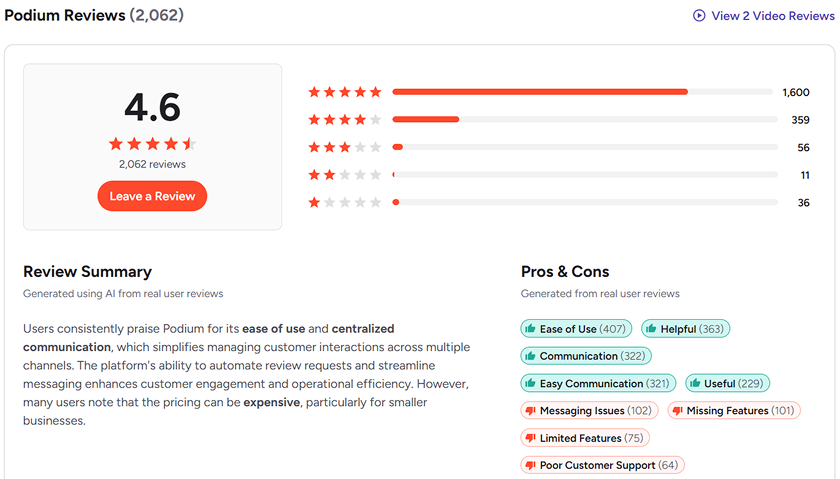
Here’s a snapshot of Podium’s G2 review summary showing real customer ratings:
2. dealr.cloud
Best For: Independent dealerships wanting marketing, leads, inventory, recon, and accounting visible in one system.
Automotive digital marketing software works when systems talk to each other. Website forms, third-party leads, and calls all arrive differently, but there needs to be one place to see them. This is why dealr.cloud gets mentioned. Owners can see which lead sources actually sell cars.
The DMS makes follow-up easier by bringing website leads, third-party leads, texts, and calls into one place, tied directly to vehicles and deals. Omnichannel marketing for car dealerships works only when everything lands in one view, and that’s why independent dealers prefer dealer.cloud.
However, dealr.cloud is not trying to be a standalone ad platform or creative studio. Campaign execution still depends on external channels. For independents tired of stitching marketing to sales, recon, and accounting by hand, this is the advantage. It belongs here because it connects marketing outcomes to dollars, cars, and daily operations.
Here is a Google review:
.png)
Car dealership digital campaigns need feedback loops. Owners want to see which ads led to real conversations and deals.
3. Dealer.com (a Cox Automotive company)
Best For: Franchise-focused dealerships looking for managed websites, SEO programs, and paid advertising oversight support.
It is widely used by franchise dealers who want marketing handled with minimal internal effort. Reviews highlight dependable website uptime, OEM-aligned layouts, and structured ad programs tied to manufacturer rules. Dealers appreciate having one vendor manage search, display ads, and inventory pages without constant oversight.
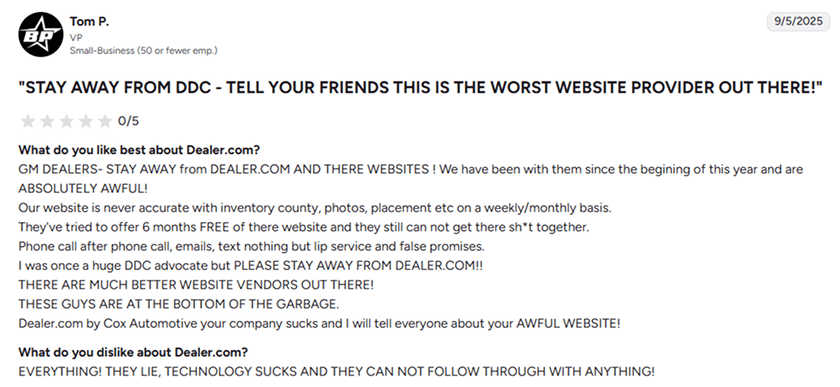
The downside is flexibility. Independent dealers often say changes take time and feel ticket-driven. Costs are higher than DIY tools, and some users report uneven results depending on assigned account teams. Custom experiments or rapid updates are harder to push through.
This review on G2 reminds you that it’s still important to do your due diligence. -
Dealership marketing tools should reduce steps, not add them. Dealers already juggle inventory, recon, deals, and accounting. When a tool requires copying links, re-entering customers, or checking five screens, it gets ignored.
4. Dealer Inspire
Best For: Growth-minded dealerships looking for fast websites, built-in chat, and structured lead routing workflows.
Dealer Inspire is included because it focuses heavily on converting site traffic into conversations. Dealers like the page speed, clean vehicle pages, and chat tools that push leads directly to sales teams. Many reviews mention improved form fills after switching, especially on mobile traffic.
The limits show up after the lead arrives. Some dealers say follow-up rules need careful setup or leads fall through cracks. Pricing can rise with add-ons. Car marketing software only matters if it moves inventory faster. Clicks and impressions look fine on paper, but owners care about sold units.
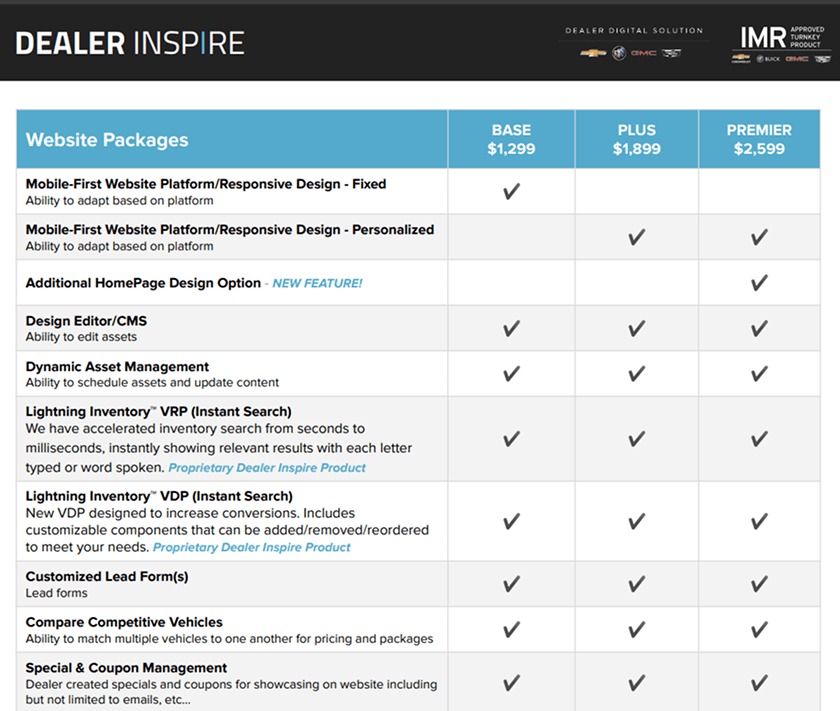
Price starts at $1299 / mo:

5. Fullpath (formerly known as AutoLeadStar)
Best For: Data-driven dealerships looking for cross-channel campaigns using first-party customer behavior signals.
Fullpath earns its place by helping dealers use their own customer data for targeting. Reviews often mention better reach to past buyers through email, ads, and social channels without manual list building. Dealers like seeing sales, service, and website activity inform campaigns automatically.
Where it struggles is setup and expectations. Smaller teams say onboarding takes effort and requires clean data to see value. It is not a plug-and-play ad tool, and reporting takes time to interpret. Dealers expecting instant results may be disappointed. Fullpath fits stores that already understand their data and want smarter targeting, not generic ads.
6. Orbee
Best For: Dealers looking for shopper identity tracking and retargeting based on real on-site behavior.
Orbee stands out for connecting anonymous website visits to known shoppers. Dealers value seeing which vehicles customers viewed before calling or submitting forms. Reviews note stronger retargeting relevance and clearer visibility into buyer interest paths.
However, lead generation software for car dealerships can only help if you have a system to handle those leads correctly. Email and SMS marketing for car dealerships works when messages are timely and specific. Dealers see higher replies when texts include photos and direct vehicle links, not generic templates.
The drawback is complexity. Setup requires coordination with websites and ad vendors, and some dealers say insights are powerful but not always easy to act on. Smaller stores may underuse the data without dedicated marketing help. Costs can also feel high for single rooftops. Orbee earns its spot for dealers who want deeper visibility into shopper intent and are ready to use it in ads and follow-up.
7. CDK CRM
Best For: Franchise dealerships looking for CRM tightly connected to inventory, deals, and accounting systems.
CDK CRM is included because it sits close to the transaction. Dealers like seeing leads, showroom visits, and sold deals tied together without exporting data. Managers rely on activity logs and sales reporting to spot follow-up gaps. Car dealership digital campaigns only work when inventory is current. Promoting cars that are already sold or stuck in recon wastes spend.
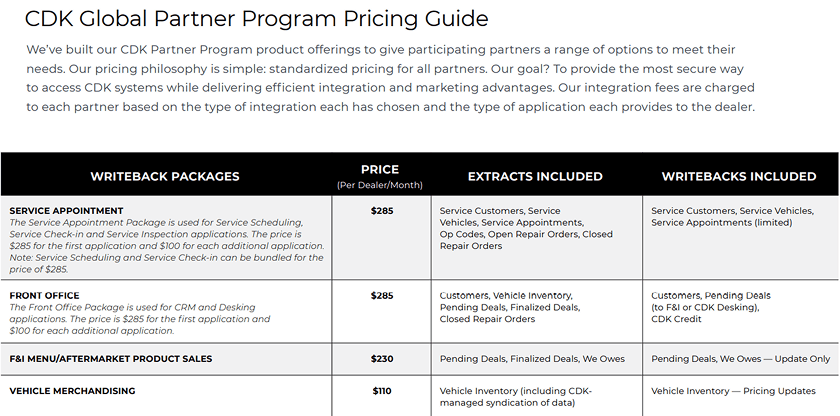
The friction comes from usability and cost. Sales teams often describe the interface as dated and slower to learn. Custom changes require admin help, and smaller stores feel locked into long contracts. Support quality varies by region. CDK CRM fits dealerships that value process control over speed. It lives inside the CDK ecosystem.
Price starts at $285 per dealer/month:

8. AutoAlert
Best For: Sales teams looking for ownership, equity, and service-based alerts to trigger outreach.
AutoAlert earns its spot by giving salespeople a clear reason to call customers. Dealers like alerts tied to equity position, service milestones, and lease terms. Reviews often mention improved re-engagement of existing customers without buying new leads.
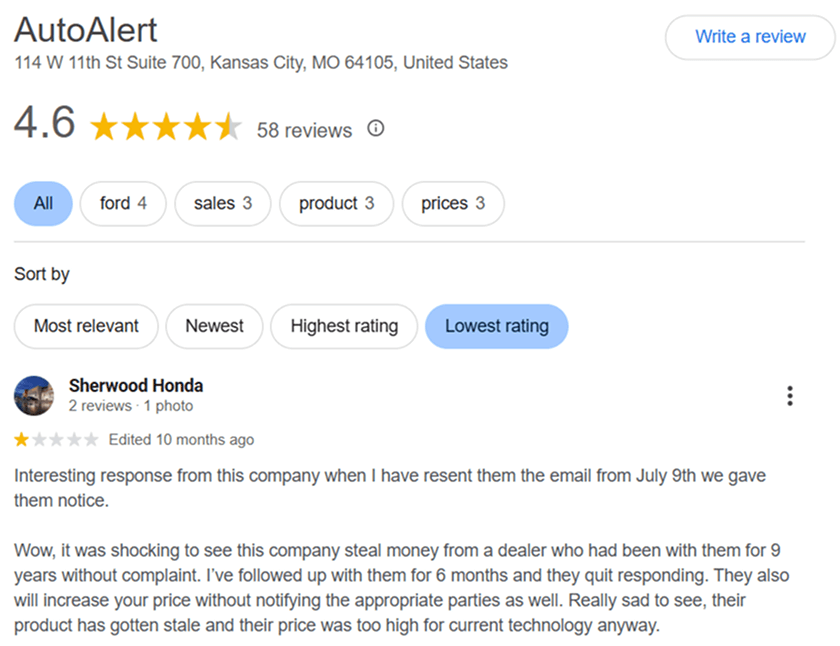
The downside is dependence on data quality and discipline. Alerts lose value if sales teams ignore them or if records are outdated. Some users find the interface busy and reporting limited. It also works best alongside a primary CRM rather than alone. AutoAlert fits dealerships that already have inbound leads covered and want smarter outbound timing. It belongs for teams focused on repeat business.
Here is what one of it’s customer posted on Google reviews -
9. DealerSocket
Best For: High-volume dealerships needing CRM structure across sales, BDC, and inventory listings.
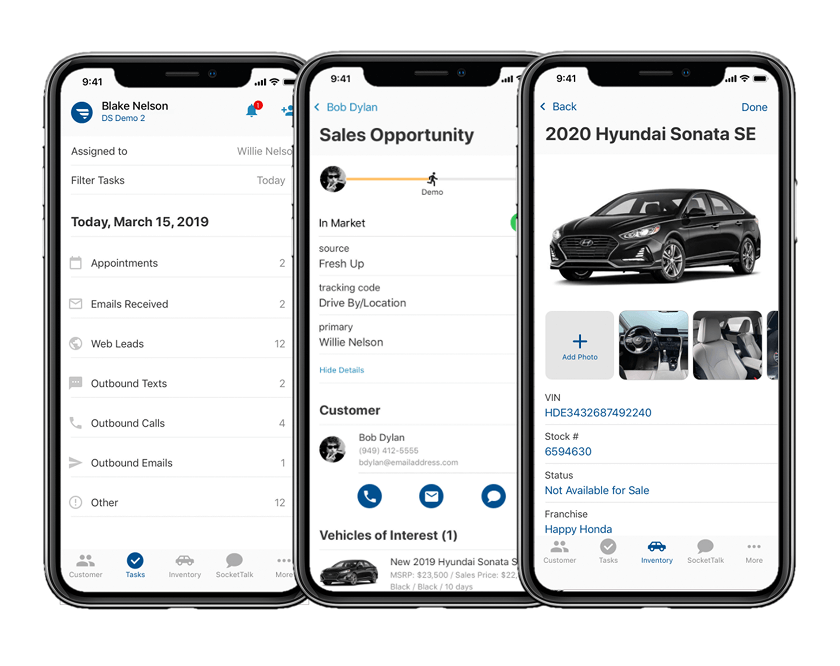
DealerSocket is widely used by stores that want rigid sales processes. Reviews highlight lead assignment rules, task tracking, and strong accountability for reps. Managers appreciate visibility into follow-up activity and missed steps.
See DealerSocket’s mobile interface for managing leads, tasks, and vehicle inventory -
Where it struggles is flexibility. Dealers often say the system feels heavy and requires training to avoid slowdowns. Custom reports can be hard to build, and UI feedback is mixed. Pricing increases as modules are added.
10. Spyne
Best For: Dealerships wanting faster vehicle photos, backgrounds, and listing visuals without studio work.
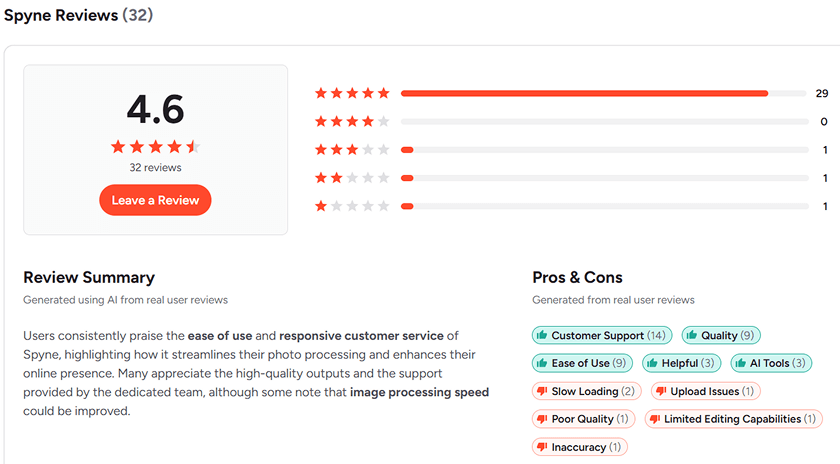
Mobile marketing for car dealerships is no longer optional. Dealers and sales teams are rarely at desks. They are on the lot, at auctions, or handling deliveries when leads arrive. Spyne earns its place by solving a real bottleneck – vehicle merchandising. Dealers like how quickly raw photos turn into clean listing images. Reviews highlight time saved and more consistent inventory presentation across marketplaces.
The limits are creative control and edge cases. Some vehicles need manual touch-ups, and results vary with lighting quality. It does not replace a photographer for premium inventory. Pricing can feel high for small lots. Spyne fits dealers focused on speed-to-list and visual consistency. It is suitable for stores listing large volumes and wanting faster turnaround.
Here’s Spyne’s review summary based on 30+ verified G2 reviews:
11. ActivEngage
Best For: Dealerships needing staffed live chat to qualify leads outside normal sales hours.
Dealers like having trained agents respond when sales teams are busy or offline. They have a better appointment setting system and cleaner lead notes than basic chat widgets.
The trade-off is cost and control. Dealers do not own the conversations in real time, and outcomes depend heavily on agent quality. Some users want tighter alignment with in-house sales language. Reporting is adequate but not granular. ActivEngage fits stores that miss after-hours leads and want human chat without staffing internally.
Price starts at $599/month:
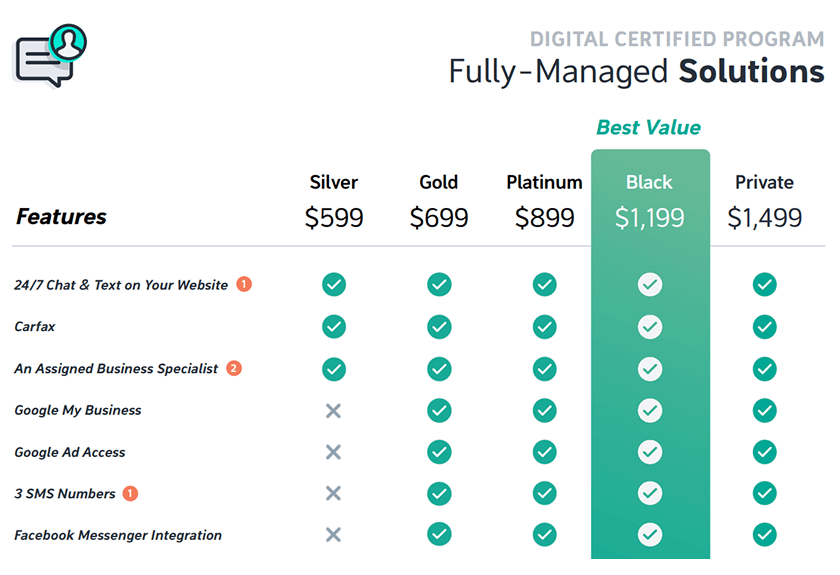
12. Gubagoo
Best For: Dealers looking for AI-assisted chat that routes conversations into sales workflows.
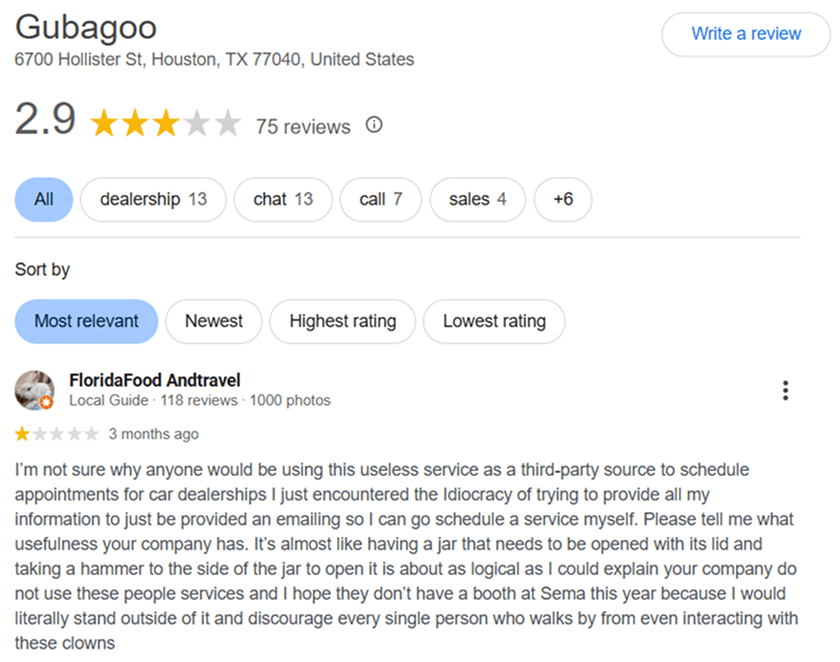
Gubagoo is included for its conversational approach rather than static chat prompts. Dealers rely on its response times, photo sharing inside chat, and appointment scheduling. However, challenges show up in tuning. Poorly configured flows can frustrate shoppers, and some dealers feel pricing is high for single rooftops. Managers also note a learning curve to get useful reports.
Maybe this is one of the reasons for the low Google review score -
Automotive marketing automation causes problems when it feels robotic. Messages still need to sound like a dealership, not a script.
13. vAuto Conquest
Best For: Dealers running targeted outreach based on ownership cycles, equity, and buying signals.
vAuto Conquest focuses on timing. Dealers value alerts tied to market behavior and ownership windows rather than blanket campaigns. The downside is cost and complexity. Smaller dealers often say it feels enterprise-oriented, and results depend on sales execution. It works best when paired with disciplined follow-up. Reporting is functional but not intuitive. vAuto Conquest fits stores focused on outbound sales precision.
14. EbizAutos
Best For: Independent dealers needing basic websites with inventory tools and lead capture forms.
EbizAutos appears here for practicality. Dealers like quick site launches, simple inventory pages, and bundled tools without complex setup. Reviews often mention responsive support for routine changes.
Limits show up in flexibility and performance. Custom layouts are constrained, and advanced marketing features are minimal. Some users report dated design options compared to newer platforms. EbizAutos fits small to mid-sized independents wanting functional sites without heavy management.
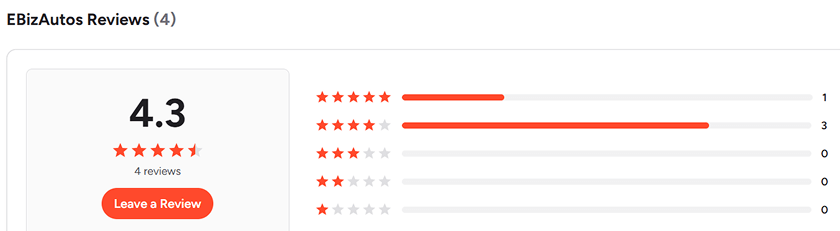
EbizAutos rating by real users on G2:
15. Impel
Best For: Dealerships wanting automated shopper follow-up using AI-driven conversations across sales and service.
Impel earns its spot by handling repetitive outreach that sales teams often delay. Dealers like automated text and email follow-ups tied to browsing activity, abandoned leads, and service reminders. Reviews mention better response rates without reps manually chasing every inquiry.
The friction shows up in configuration and cost. Stores need time to tune messaging so it sounds natural.
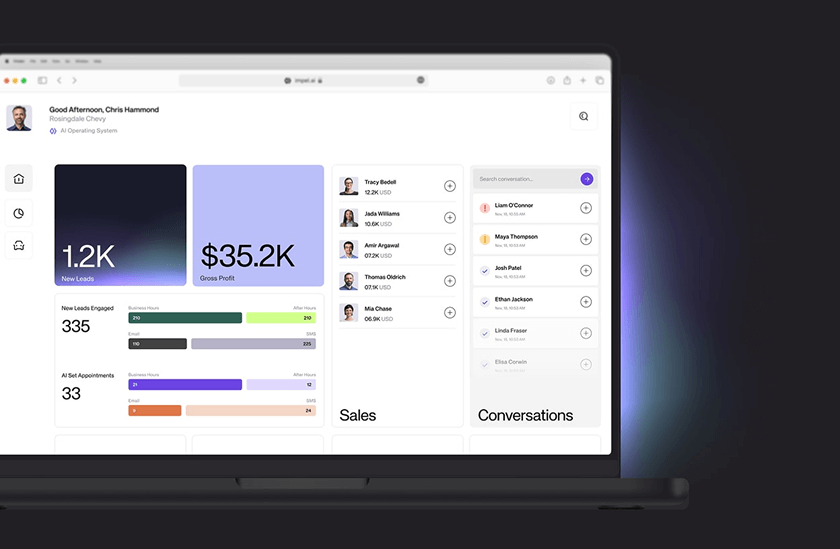
Here’s Impel’s AI-driven dashboard tracking leads, profit, and conversations.
16. ProMax
Best For: Dealers wanting one vendor for CRM, desking, and marketing execution under one contract.
ProMax makes the list for consolidation. Dealers appreciate having sales workflows, campaigns, and reporting in one place rather than juggling vendors. Reviews often cite solid equity mining and campaign automation.
Downsides include interface density and onboarding effort. Some users report slower navigation and reliance on training to avoid errors. Marketing tools work best when data hygiene is strong. ProMax fits dealerships that prefer fewer vendors even if setup takes time. It earns inclusion for stores focused on consolidation over point tools.
17. Autoweb
Best For: Dealerships buying third-party leads to supplement organic website traffic.
Autoweb appears here because it supplies consistent lead volume. Dealers value access to in-market shoppers across multiple brands and regions. Reviews mention predictable flow when campaigns are tuned correctly.
The trade-off is lead quality variance. Some dealers report high follow-up effort with mixed close rates. Cost per sale depends heavily on sales process discipline.
18. EDealer
Best For: Canadian dealerships needing bilingual websites, OEM programs, and regional compliance support.
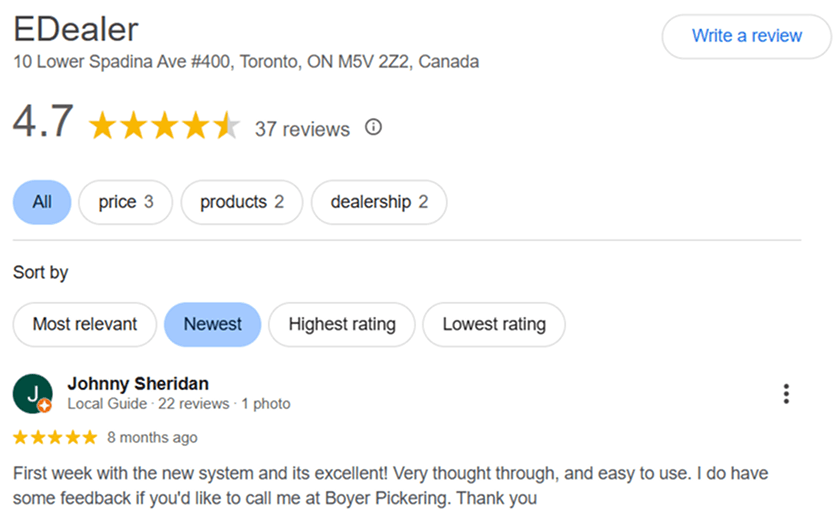
Dealers highlight French-English site support, local inventory feeds, and alignment with OEM requirements. Reviews often mention stable hosting and predictable execution.
Limits appear in flexibility. Custom design requests can feel constrained, and advanced marketing controls are limited. Reporting is basic. Independent dealers seeking aggressive experimentation may feel boxed in. EDealer fits stores prioritizing compliance and reliability over frequent changes. It belongs to Canadian dealers wanting marketing that works within local rules.
Here’s a screenshot of a genuine Google review for EDealer:
19. AutoSync
Best For: Canadian dealers wanting automated ads, listings distribution, and reporting from one provider.
AutoSync makes the list for simplifying multi-channel execution. Dealers like having inventory feeds, paid ads, and performance summaries handled together. Reviews mention reduced vendor coordination.
The downside is transparency. Some dealers want deeper insight into campaign decisions. Results depend on budget consistency, and customization is limited. It works better for steady exposure than tactical pushes. AutoSync fits dealerships that want marketing handled with minimal oversight. It earns its place for Canadian stores preferring simplicity over hands-on control.
20. Focus Auto
Best For: European garages and dealers needing CRM workflows tailored to service-heavy operations. Ideal for operators balancing sales with daily service workloads.
Focus Auto appears here for its service-first orientation. Dealers value appointment tracking, customer history, and reminders tied to workshop activity. Reviews often mention easier adoption compared to broader dealership systems.
Limits show up on the sales side. Marketing tools are basic, and multi-rooftop reporting is limited. It works best for service-led businesses rather than high-volume retail sales. Focus Auto fits independent garages and smaller dealers.
21. MotorK
Best For: European dealer groups running lead management and digital retail across multiple brands.
Dealers highlight support for multiple markets, languages, and OEM programs. Reviews mention structured lead handling and online buying paths.
Trade-offs include cost and setup time. Smaller dealers often find it heavy, and rollout requires planning. Marketing agility depends on configuration. MotorK fits dealer groups with resources to manage complexity. It belongs to multi-brand European operations needing consistency.
22. Pinewood DMS
Best For: UK dealer groups wanting marketing, sales, and operations tied to one core system.
Pinewood DMS is included for its deep UK market presence. Dealers value tight links between marketing activity and operational data. Reviews mention strong multi-site control.
However, custom changes take time. Downsides include a learning curve and reliance on training. This is not suitable for independent single-location dealers.
23. AutoTrader Connect
Best For: UK dealers syncing inventory, pricing, and leads with AutoTrader listings.
AutoTrader Connect earns inclusion for accuracy and speed. Dealers like near real-time inventory updates and reduced manual errors. Reviews mention smoother lead flow into sales systems. It focuses on listings and does not replace broader marketing tools. Dealers still need systems for follow-up and ads. AutoTrader Connect fits UK dealers heavily reliant on AutoTrader. It belongs to stores treating listings as a primary demand source.
Choosing the Right Automotive Marketing Software is Confusing
As this list shows, the lines often blur between automotive marketing software and dealership systems. Lead management, accounting, recon, and marketing overlap more than most vendors admit. What matters is not the label on the tool, but whether it supports how the dealership actually operates day to day.
Digital marketing for dealerships falls apart when follow-up depends on individuals. If a salesperson forgets to respond, the opportunity is gone. Dealers know leads pile up during auctions, deliveries, and paperwork. Systems need to enforce response, not rely on best intentions.
The right-fit automotive marketing software allows dealerships to set automation steps that send the first response before interest fades. When marketing, sales, and operations work from the same view, goals are easier to achieve.
.png)

%20isn%E2%80%99t%20as%20Disruptive%20for%20You%20Think.png)